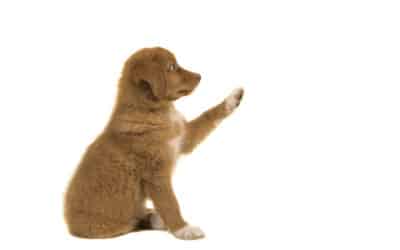
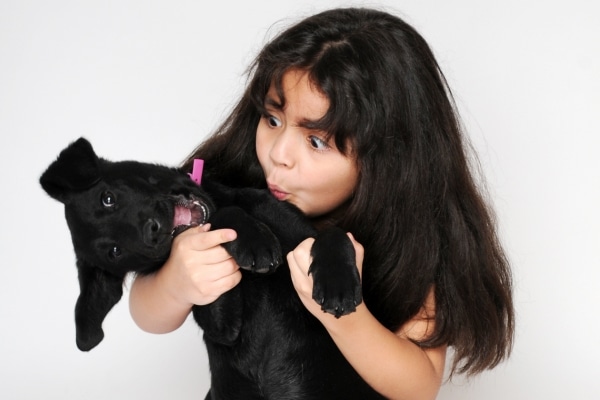
If your arms and ankles currently look like you’ve been in a fight with a very small, very determined shark, you’re deep in one of the most universal parts of raising a puppy. Almost every new owner goes through a stretch where the biting feels constant, and almost every new owner wonders at some point whether their puppy is unusually difficult.
They’re not. This is teething, and it’s genuinely one of the hardest parts of the early months simply because of how relentless it is day after day, even though nothing is actually wrong with your puppy.
Why it happens
Puppies explore the world with their mouths the way toddlers explore with their hands. On top of that, most puppies go through teething somewhere between three and six months old, and sore gums make chewing and mouthing feel good in the same way pressing on a sore tooth can feel oddly satisfying. The combination of natural exploration and physical discomfort means biting shows up everywhere, hands, clothing, furniture, and anything that moves quickly enough to look interesting.
What doesn’t help
Telling your dog off, pulling your hand away sharply, or getting frustrated tends to make things worse rather than better. A sharp pull away often reads as an invitation to chase, and a puppy who’s excited by the reaction is likely to bite again, harder, to get it back.
Punishing the behaviour directly usually doesn’t work well either. Biting at this age is developmentally normal and genuinely hard for a puppy to stop themselves doing, so telling them off for it tends to just add confusion on top of a problem they can’t fully control yet.
What actually helps
Redirect early. If you notice your puppy getting mouthy during play, offer a toy or chew before teeth land on skin, while they’re still winding up rather than already there.
Keep a safe chew nearby at all times. Teething puppies need something appropriate to chew constantly, not occasionally.
Calmly disengage. If biting does happen, stopping the interaction and walking away for a moment, without drama, teaches your puppy that biting ends the fun rather than continuing it.
Manage energy and tiredness. An overtired or under-stimulated puppy is often a more bitey puppy. Some of the worst biting stretches line up with a puppy who simply needs a nap or a change of activity. Try putting the puppy in a pen or crate for a nap. You might get some whining or fidgeting for a minute or two, but chances are that your puppy will crash and have a good nap and be much more amicable afterwards.
Give it time. Most owners find the intensity of biting drops off noticeably once teething finishes, often somewhere around six months, even without anything dramatic changing in the approach.
When to check in with a professional
If biting is paired with genuine aggression signs, stiff body language, growling that escalates rather than a normal warning, or biting that’s causing real injury rather than the usual scrapes and bruises, it’s worth getting a qualified trainer’s eyes on it early rather than waiting to see if it passes. We would also recommend a vet check to make sure your puppy is not feeling sore or unwell and lashing out as a result.
Where to go from here
Our Puppy Training program includes structured lessons on trust, handling and appropriate play that help puppies learn what to do with their mouths instead of just waiting out the teething phase.
Start the full Puppy Training program FREE for 6 months: Train with us for free
If you’re also curious what else you can do to tire out your puppy’s body and mind, our free 10 Day Dog’s Perspective Agility Challenge is a fun way to start exploring agility together at home, no equipment needed and puppies can join in at any age!
Join the free challenge: Start the Dog’s Perspective Agility Challenge