Most handlers have had a run where something went wrong and they couldn’t tell you exactly why. The dog took the wrong obstacle, or turned wide on a turn they’ve done a hundred times before, or the whole thing just felt rushed and reactive from start to finish. Walking off the line, replaying it in your head, and coming up with nothing useful is one of the more frustrating feelings in agility.
The good news is that most of those runs do have a clear explanation. Dogs respond to the picture they’re given, and when a mistake happens, something in that picture wasn’t quite right. Figuring out which part is where most handlers get stuck.
Agility is more like a conversation than most people realise
Here’s an analogy that tends to land well. Imagine you’re mid-conversation with someone and they suddenly turn around and walk away. Most people would stop talking, feel confused, and probably just wait to see what was happening. That’s essentially what a dog experiences when connection breaks down on course. The conversation got interrupted, and now they’re searching for it again rather than focusing on the job.
This is the idea behind a framework called CCC: Connect, Commit, Cue. It’s one of the core concepts in the OneMind Dogs method, and it describes what needs to happen between every obstacle on course, not just the difficult ones, but every single transition from one obstacle to the next.
Breaking down the three Cs
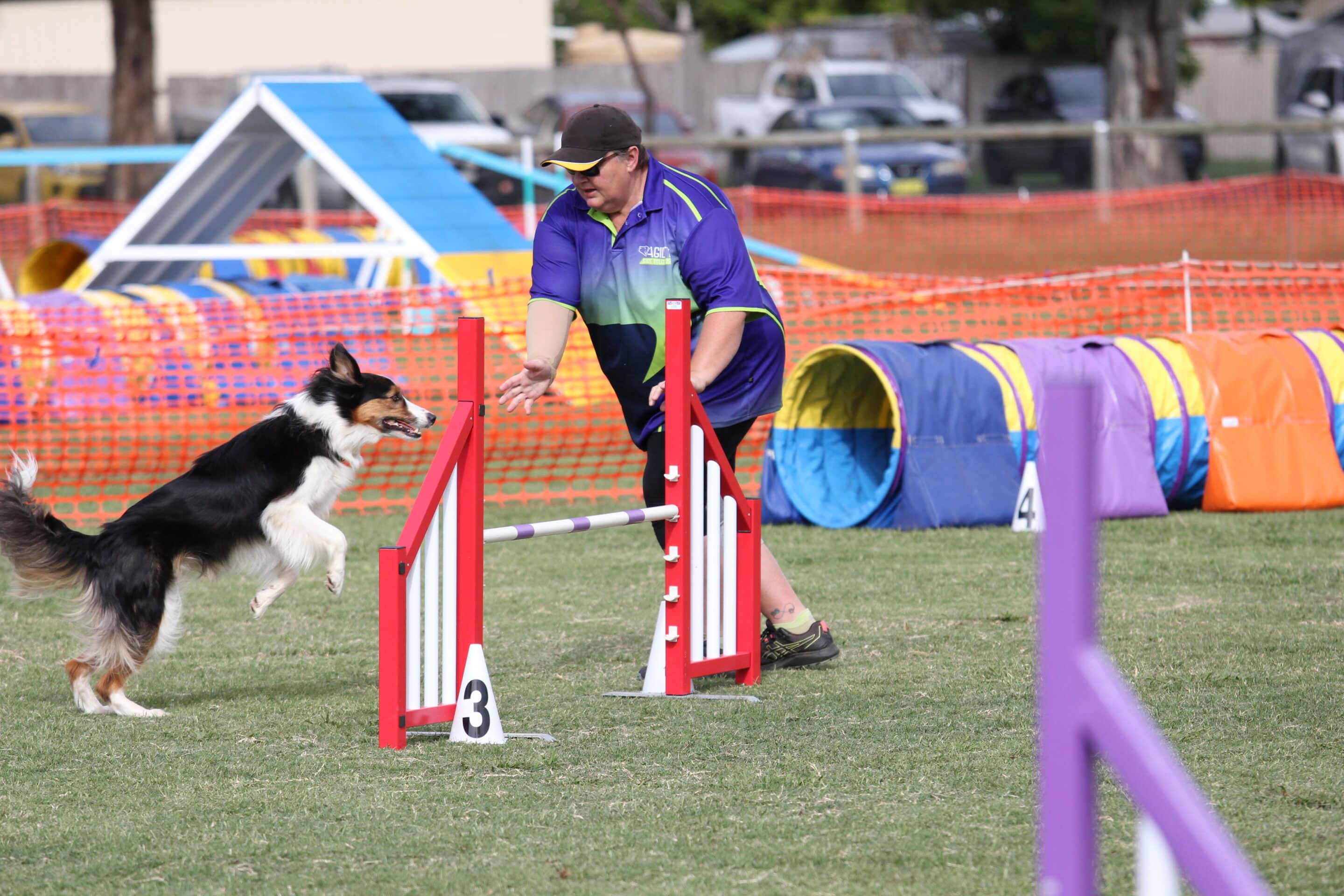
Connection is the mutual awareness between handler and dog. Contrary to what a lot of people assume, it doesn’t mean staring at your dog the whole run. Keeping them in your peripheral vision, showing the side of your face, keeping your head turned toward their line rather than looking straight ahead at the next obstacle — these are all forms of connection. When it breaks down, dogs drift off course, pick their own lines out of tunnels, end up on the wrong side of the handler, or start barking and running in to try to get the handler’s attention back. None of that is bad behaviour. It’s a dog trying to reconnect. Learn more in this free webinar >
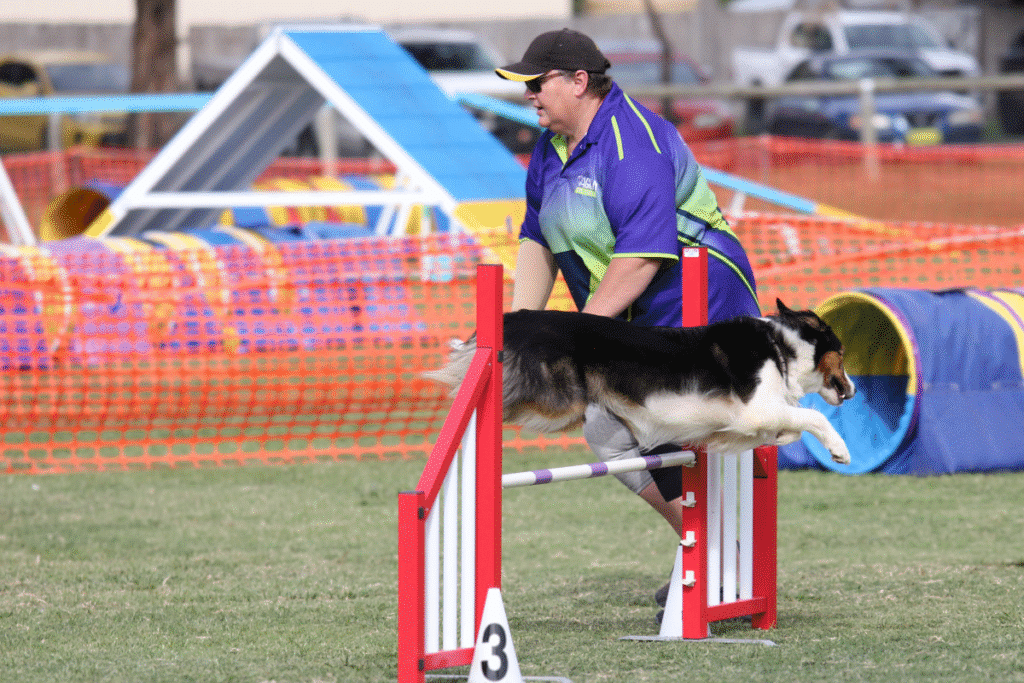
Commitment is the moment a dog mentally locks onto an obstacle and decides “that’s where I’m going.” The part that surprises most handlers is that commitment happens before the obstacle is performed. There are physical signs if you know what to look for: a change in stride, the head dropping slightly, the dog’s gaze locking onto the jump or tunnel. Once that moment happens, a well-trained dog completes the obstacle regardless of what the handler does next. That’s what gives handlers time to get ahead on course. They can move as soon as they see commitment rather than waiting for the obstacle to be finished.
Cue is the information the handler gives the dog about what comes next. Should the dog extend forward, turn tightly, collect, change sides? Dogs read all of that from the handler’s movement, position, chest direction, and feet — well before any verbal is processed. The cue has to arrive before the dog leaves the ground. Once they’re in the air, they can’t change their arc or adjust their stride. A cue that arrives after takeoff gives the dog nothing useful to work with.
Why CCC is a more useful diagnostic tool than changing technique
When things go wrong, the instinct for many handlers is to reach for a different technique. That sometimes solves it, but often the technique isn’t actually the issue.
Wide turns are a good example. They’re usually blamed on late cues, and sometimes that’s exactly right. But equally common is a situation where the dog needed more information about the upcoming turn — such as the handler turning their chest toward the dog or showing a stronger rhythm change.
CCC gives handlers a way to work backwards through a mistake and find the actual source. Once it’s clear which of the three was missing, training becomes more focused and less frustrating.
Something practical to try at your next training session
Pick a short sequence of two or three obstacles. Run it with just one question in mind: can you see the moment your dog commits to each obstacle before it happens?
Watch their head, their stride, the shift in focus. Once that moment becomes visible, the instinct to move too late starts to disappear naturally. It becomes obvious that commitment has already happened and it’s safe to go.
What changes when all three Cs click
Most handlers who start working on this find they’ve been waiting longer than necessary. Not out of carelessness, but simply because they didn’t know what to look for. Once CCC starts working as a sequence, agility feels different. There’s more time. The dog moves with more confidence. Runs stop feeling reactive and start feeling connected.
That’s what this framework is really about, not a new set of rules to follow, but a different way of reading what’s happening between you and your dog on course.
Watch the free webinar
The CCC framework is straightforward to explain, but it looks quite different in action. Seeing it demonstrated across a full sequence, with examples of what happens when each C is missing, tends to make it click in a way that reading about it doesn’t quite achieve.
We’ve put together a free 40-minute webinar that covers the whole framework with video examples throughout. It’s the kind of information that tends to reframe how handlers look at their own runs, in a way that’s immediately useful at training.
Free to watch and available any time.