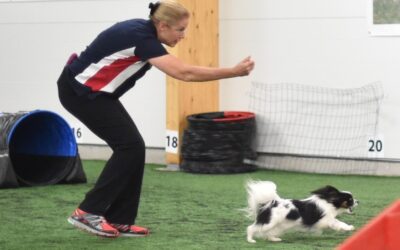
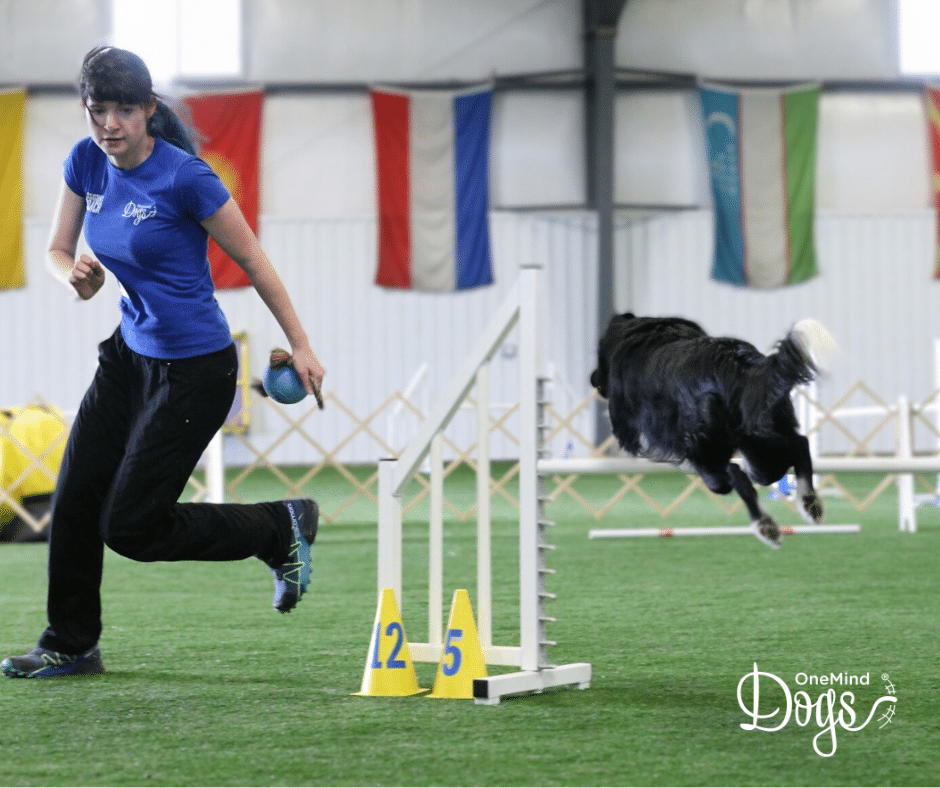
The German Turn is one of the most satisfying pieces of handling to watch. The dog takes the backside of a jump, you move forward onto the next part of the course, and the whole thing flows. It is no surprise so many handlers want to learn it.
Here is what tends to happen when people go straight for it, though. The dog gets confused, the handler gets frustrated, and the sessions start to feel like hard work for both of them. Most of the time the turn itself is not the problem. The foundations underneath it are missing.
A German Turn asks a lot of your dog all at once. If your dog already has the right foundation skills, learning the turn becomes far easier, your dog understands what you are asking much faster, and you both avoid the frustration that shuts a dog down when it cannot work out how to succeed. So before you teach the turn, it is worth making sure these foundations are in place.
The four foundation skills your dog needs first
Obstacle focus
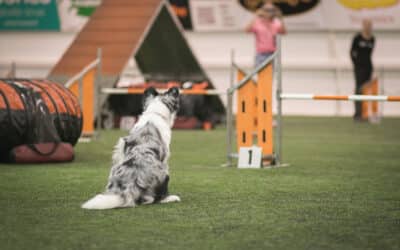
During a German Turn you move forward on the course towards the next section while your dog is still taking the jump. That only works if your dog wants to take the jump even though you are moving away from it. If your dog looks to you instead of committing to the obstacle, the turn falls apart before it starts. Obstacle focus, your dog choosing to take the jump you’ve cued, rather than following you, is the first thing to build.
Independent backside sends
A German Turn starts with a backside. If you cannot send your dog to the back of the jump without running all the way up to the wing yourself, you will never get into position for the exit line. The whole point is that you send the dog to the backside and get across the face of the jump to set up what comes next. So your dog needs to take a backside send on its own, while you are already peeling away. Without that independence, the turn is almost impossible to handle cleanly. Premium members can learn more about independent backsides in this webinar.
Staying committed through counter motion
The German Turn involves counter motion. You are moving away from the obstacle, towards the next one, while your dog is meant to keep taking the jump. A dog that has not learned to stay committed will read that movement as a reason to leave the obstacle and come with you. Teaching your dog to hold its commitment to the jump while you move in the opposite direction is what makes the turn reliable rather than hit and miss.
Jumping under distraction
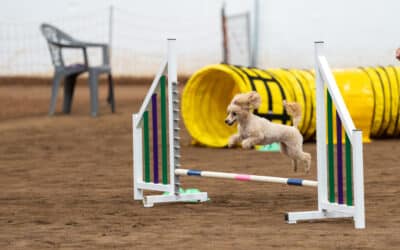
There is a lot going on for your dog during a German Turn. It has to perform lead changes and read your body language, all while clearing the bar. We often teach jumping under distraction as part of jump skill training for exactly this reason. Being able to jump cleanly while all of that is happening is a skill in itself, and it’s one your dog needs before the German Turn will hold together.
The part most handlers skip: learn the seven elements yourself first
Before you ever bring your dog into it, learn the German Turn on your own. The technique is made up of seven handling elements, and each one tells your dog something. How you move, where your position should be, where you look, where your chest points, where your feet go, where your hands go, and what verbals, if any, you need.
Practise all of that without your dog until it is very smooth and you understand what each element is telling the dog. When you focus on your own body first, you stop sending your dog mixed messages while you work out your own footwork, and you bring a clear, confident picture to the training instead of figuring it out live. That alone takes away a lot of the frustration that usually comes with learning a new technique.
Build these first, then build the turn
None of this is the German Turn itself. It is what makes the German Turn possible. Give your dog obstacle focus, independent backside sends, commitment through counter motion, and jumping under distraction, then learn your own seven elements until they are smooth, and you give your dog a real chance to understand the turn quickly and enjoy learning it. Skip the groundwork, and you spend weeks fighting a problem that was never about the turn in the first place.
Learn the German Turn the right way
Want to learn the German Turn in detail, foundations and all? Start your Agility Premium free trial. You will get the foundation skills, the seven handling elements broken down step by step, and the troubleshooting and common mistakes that help you get it right with your dog from the start.