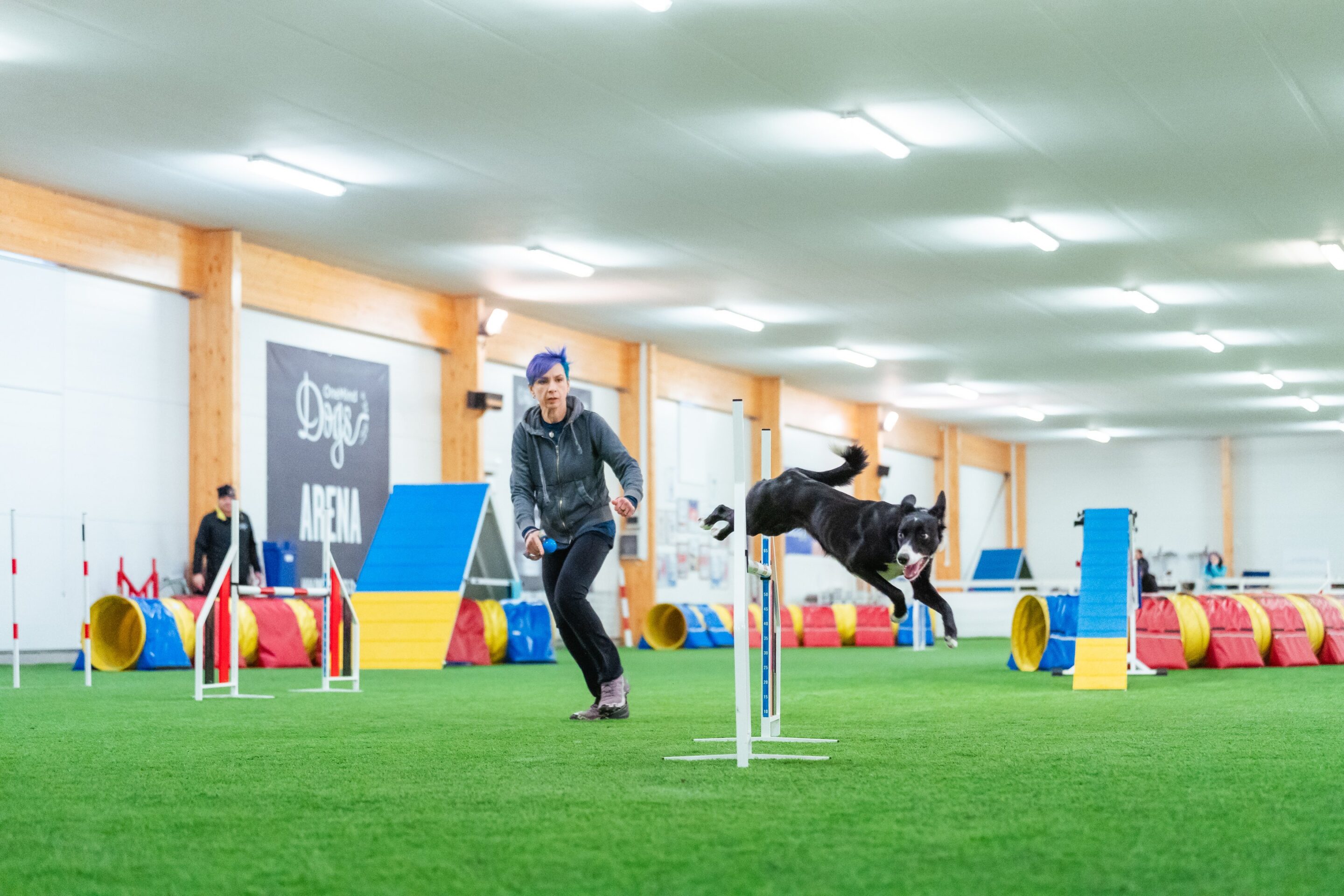
You’ve practised your backside cue in the backyard for weeks. You can stand on the patio, say the word, and your dog runs out and does it perfectly. Then you get to a trial, say the exact same word, and your dog goes straight past the jump as if you said nothing at all.
If this sounds familiar, you’re in good company. It’s one of the most common things handlers ask us about, and it almost never means your dog is stubborn or not listening on purpose.
Your dog reads your movement, your position, where you look and where your chest points without being taught. A verbal cue is different. Dogs aren’t born knowing English, so every word is something they had to learn, and something they have to stop, hear and think about in the moment. That makes verbals the weakest of the seven handling elements in the OneMind Dogs method. They are useful, and they absolutely have a place, but they need more support than most of us give them.
So when a cue “stops working”, it usually comes down to one of five things.
1. Your body is saying something different
This is the first thing to check. If your verbal says one thing but your movement, position, eyes and chest say another, your dog will follow your body. That’s not your dog ignoring you. It’s your dog reacting to the clearest information it has.
It can be tempting to fix this by repeating the cue over and over until the dog does it anyway. Be careful with that. When a verbal is drilled against what your body is saying, your dog can start to tune out parts of your body language, and you don’t always know which part. We often see this with throttles and serpentines, where the dog stops reading the handler and just guesses which word is coming next. The aim is for all seven elements to say the same thing, with your voice there to confirm it.
2. It worked at home, but home isn’t a trial
At home, most of us are a bit relaxed. We walk or jog, send the dog and throw the reward, because we’re repeating it lots of times. At a trial, you’re running as fast as you can, your dog is more excited, and there’s noise, people and other dogs everywhere.
Your dog will still react to your movement in that state, because that’s natural. But a learned word needs your dog to hear it, understand it and act on it, and that’s much harder when it’s over-aroused. If a cue falls apart at trials, practise it with you running flat out and with some of that trial-day energy. Add tempting obstacles too. A backside cue might be solid on a single jump, then disappear the moment you put a tunnel behind it.
3. The cue came too late
Your dog needs to hear the cue once it has committed to the previous obstacle. That’s when it starts planning what comes next. If the word comes when your dog is already taking off, it simply has no time to add a stride or change its lead leg.
When I look at videos with handlers, we often pause on the moment they said the cue and find the dog was already one stride away. You can check this yourself. Watch your own videos with the sound on, pause when you give the cue, and ask whether your dog had time to respond. A fast dog that thinks ahead might need it two obstacles early. A dog that switches off late might only need it a couple of strides before.
4. Your dog learned something slightly different
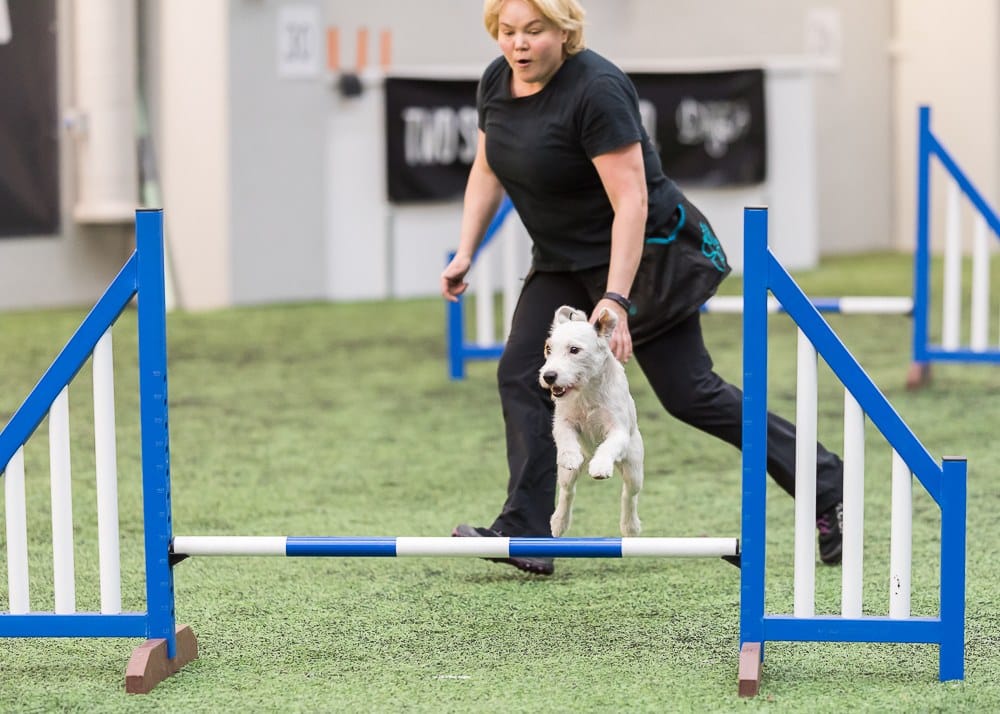
Sometimes a dog learns a different meaning than the one we meant to teach. One of our coaches has taught heeling to all of her dogs in her laundry, because the small space helps a dog stay close. But one particular dog learned something different. When she moved to the lounge room and gave the cue, the dog ran off and stood next to the washing machine. To that dog, the word meant “go to the washing machine”, not “come next to me”.
The same thing happens on course. A common one is obstacle names. If you always give your dog walk cue when your dog is right in front of the dog walk, your dog may just be doing what’s in front of it. Try this: put a jump and a tunnel close together, hold your dog in front of the tunnel and give your jump cue. Then swap it around. You’ll find out quickly whether your dog knows the word or the picture.
5. The cue needs a top-up
Verbal cues need maintenance, just like contacts. If your dog has broken a stop on the seesaw a few times and you kept running, the cue now means something looser to your dog than it used to. That’s not your dog’s fault. It’s just what the word has come to mean.
A few short, focused sessions are usually enough to bring the meaning back. While you’re at it, check that the word is short, said the same way each time and doesn’t sound like any other cue. I learned this the hard way. I named one dog Inky and could no longer use an “in” cue, and my newest puppy is Bee, so “weave” is now “poles”.
Start with connection and clarity
If your dog seems to ignore a cue, try going through these five in order.
- Is your body saying the same thing?
- Has the cue been practised at trial speed?
- Was it on time?
- Does your dog know what the word really means?
- Does it need a top-up?
Most of the time, the answer is in one of them.
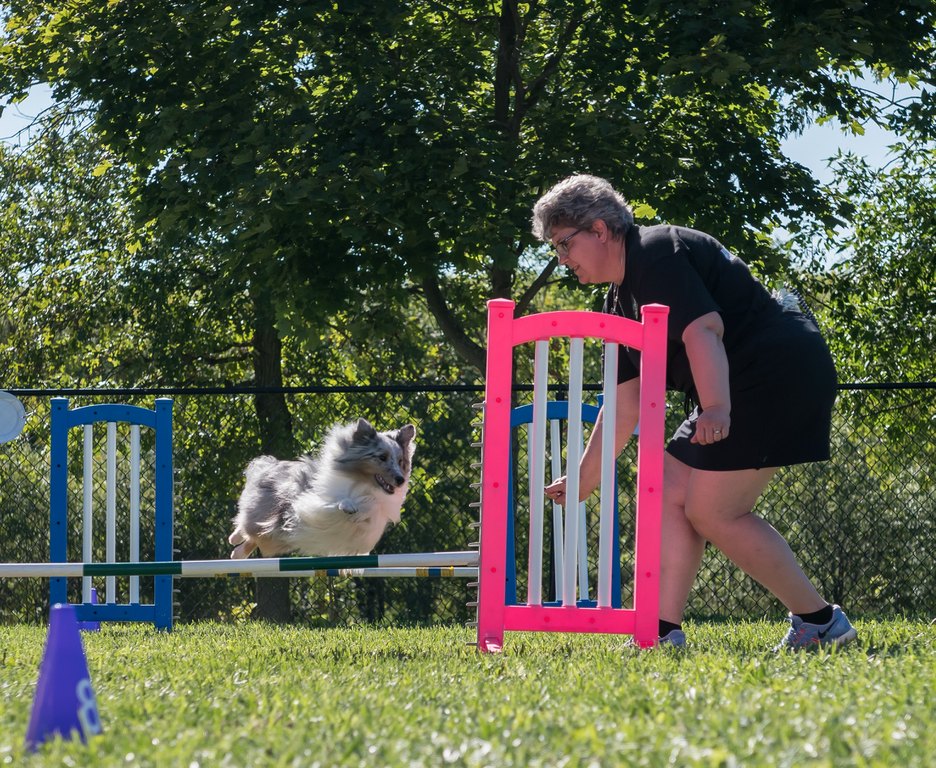
And remember, your dog isn’t getting it wrong. It’s doing its best with the information it has. When you focus on connection and clarity first, the rest tends to fall into place.
Want to go deeper? Watch the full Verbals in agility webinar recording for more on left and right cues versus turns towards and away from you, and how many verbals your team really needs. If you’d like someone to look at your own videos and spot where a cue is going wrong, that’s exactly what coach feedback in Agility Premium is for. You can start with a free trial on the OneMind Dogs site.