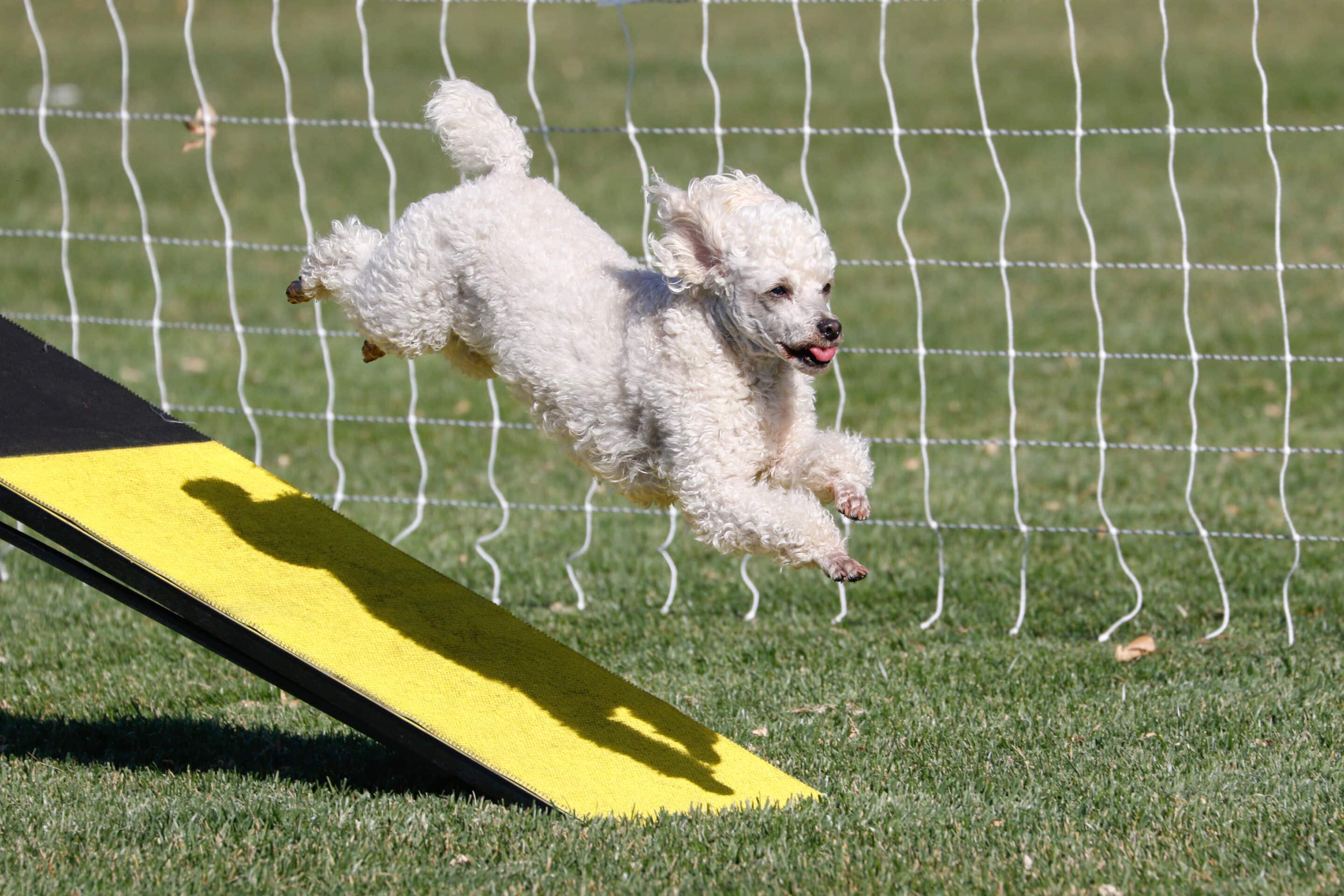
If you’ve walked off a course frustrated, wondering why your dog took the wrong obstacle or blew straight past a jump you were sure you’d handled correctly, you’ve probably asked some version of this question. Is my dog being stubborn? Not listening? Doing it on purpose?
Realistically, almost none of that is what’s actually happening. In our experience watching and analysing thousands of runs, the vast majority of agility mistakes come down to one of two things: the dog didn’t get clear or timely information from the handler, or the dog hasn’t yet built the skill needed for that exact situation.
Your dog doesn’t listen to you, he reads you
If you think about the fact that your dog reads every move you make, it changes how you watch your own runs. Dogs aren’t just following verbal instructions the way a person might. They’re reading movement, position, and the picture your whole body creates in the moments before an obstacle. You’d be amazed what your dog can already read from your movement, often more than you realise you’re showing him. We actually designed a free challenge to try with your dog that really opens your eyes to this fact.
So when a dog takes an obstacle you didn’t expect, he’s not ignoring the plan. He’s telling you what the plan actually looked like from his point of view. Maybe your shoulders rotated too far, maybe your feet pointed somewhere the rest of your body didn’t, or maybe your timing was a few strides behind where he needed it to be. He responded to that information faithfully. He just wasn’t responding to the run that was happening inside your head.
To be honest, the more useful question isn’t “why didn’t he listen.” It’s “what did he actually see.” Those two questions send you looking in completely different places, and only one of them gets you anywhere. Find out more about that in our free course here.
The two real reasons for agility mistakes
1 – Unclear or late information
This is where handling comes in. Dogs pick up cues through connection, commitment, and the picture your body gives them before an obstacle, what we call the CCC framework. If a cue arrives late, or if two parts of your body are saying different things at once, your dog has to guess. He’ll guess based on whichever signal is strongest, which isn’t always the one you meant to send.
2 – A skill that hasn’t been proofed yet.
Sometimes the handling was genuinely clear and the dog still got it wrong, because he hasn’t fully learned to hold that skill under new conditions yet. A dog who nails his weave poles in the backyard might struggle with them at a busy trial with dogs barking nearby, and that’s not regression. It’s a skill that was trained in one context and hasn’t generalised to a harder one.
Once you start sorting a mistake into one of these two buckets, agility stops feeling like a mystery and starts feeling like a puzzle you can actually solve.
Your dog is your best instructor
Here’s a way of thinking about it that a lot of handlers find useful: your dog might be one of the best feedback tools you have, arguably better than any video or seminar, because he’s giving you real time feedback on your own handling.
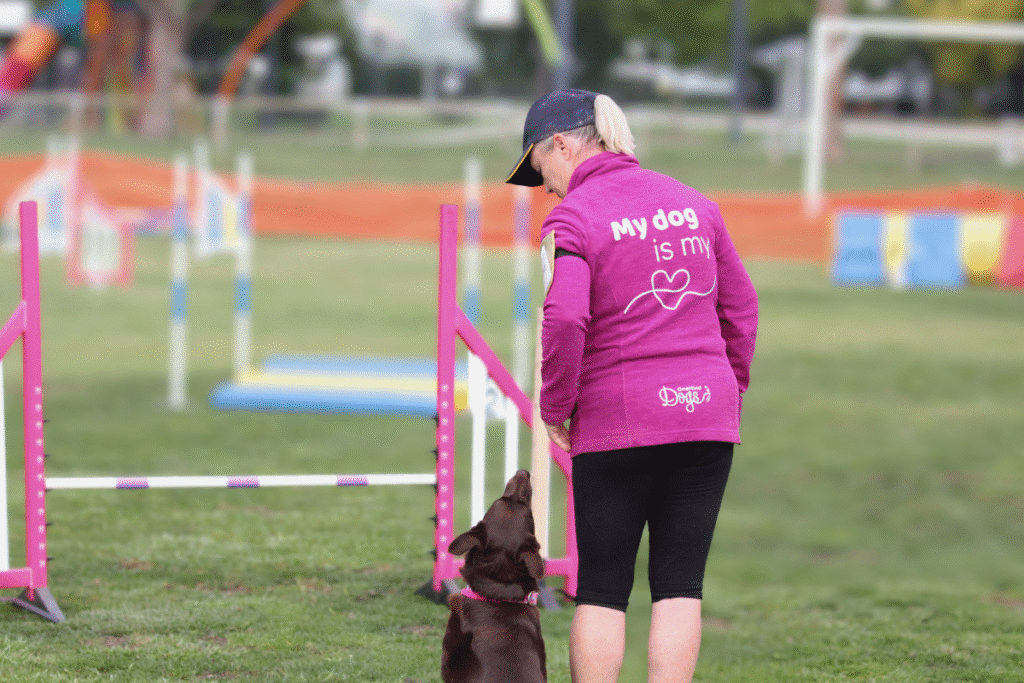
If your dog does something other than what you intended, try not to argue with him in your head. He’s probably right about what you actually communicated. Instead, get curious about it. What part of your position, timing, or movement might have told him to go there instead? Rewind the moment, on video if you can, and look for the picture from his eye line rather than yours.
This is also where trial and error becomes genuinely useful rather than something to avoid. Plenty of handlers hold back from experimenting with new handling moves because there’s no coach standing there to catch every error. You don’t always need one for this part. If your dog offers a different response than you expected, reward the effort anyway and treat the result as information. Try adjusting one thing at a time, your feet, then your shoulders, then your timing, and watch how his choices change. That’s how you find out which parts of your handling actually matter to your particular dog.
However, none of this works if frustration creeps in. A dog who senses annoyance after doing his honest best to interpret your cues will start to hesitate rather than commit, and that makes the original problem worse, not better. Staying curious instead of corrective is what actually turns mistakes into progress.
What to check next time your dog “gets it wrong”
Next time you catch yourself thinking your dog is being difficult on course, it can help to run through a few questions instead.
- Was the information clear? Did your feet, shoulders, and position all agree with each other before the obstacle?
- Was it on time? Dogs need to see a cue early enough to adjust stride and prepare, not after they’ve already committed to something else.
- Has this skill actually been proofed in this context? A behaviour that’s solid at home isn’t automatically solid at a trial, in a new location, or with distractions nearby.
Once you know which of these it was, you know what to work on. And that’s a far more useful place to end a training session than wondering whether your dog is just being naughty, because he almost certainly isn’t.
Join Agility Premium to work one-on-one with our coaches
When you join Agility Premium, you’ll be assigned a personal coach to guide your agility journey and provide feedback on your videos and what to train next. You’ll also get unlimited access to our learning library, with lessons on every aspect of agility.
Learn agility from your dog’s perspective, and everything becomes easier.