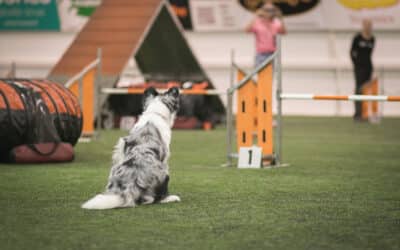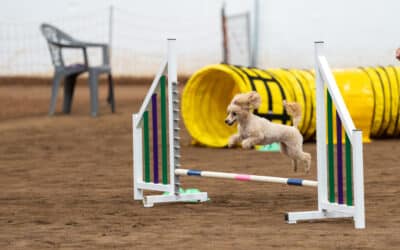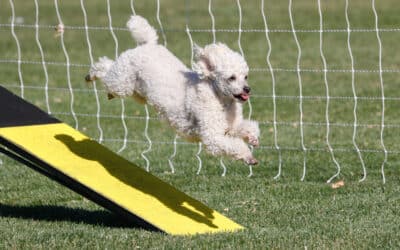
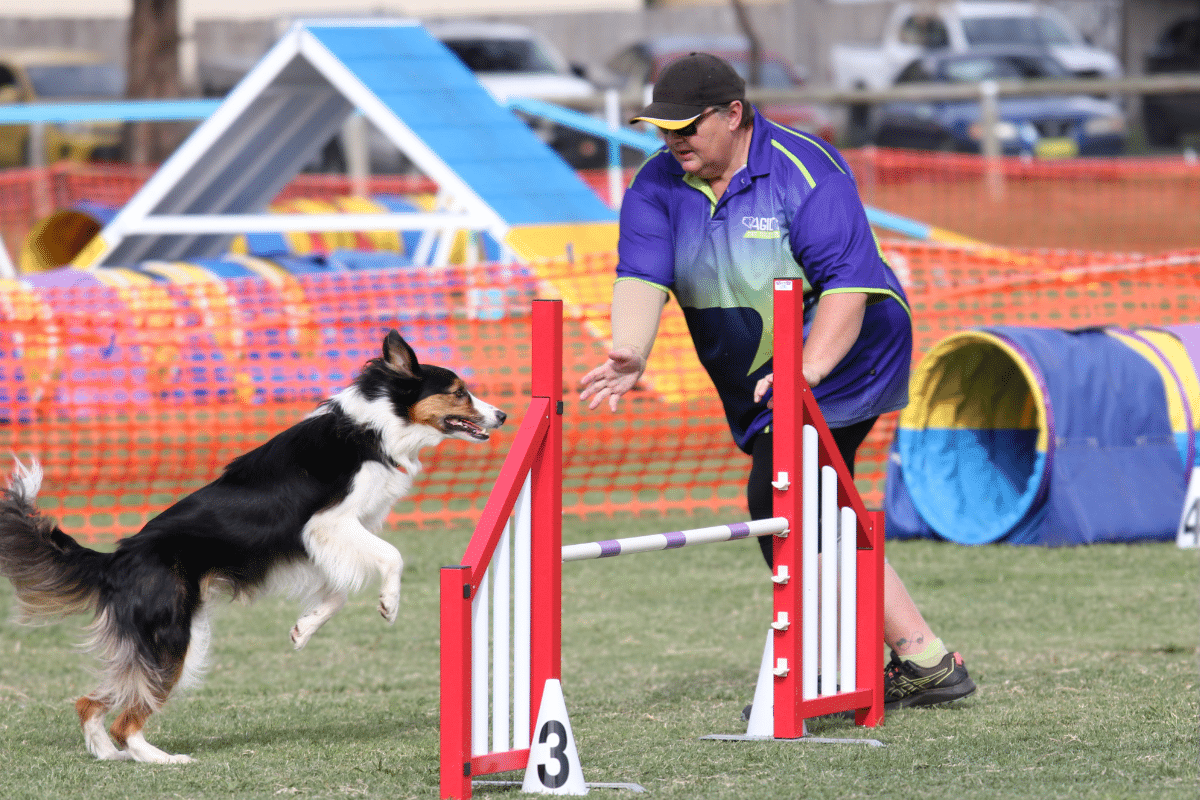
If you’ve ever watched agility and thought, I’d love to try that, but I can’t run fast enough, you’re not alone.
It’s one of the most common thoughts in agility. Even those already competing in agility often feel like it would be easier if only they could run faster. You see a line getting away from you, your dog taking an off-course obstacle, or a turn that feels just out of reach, and it’s easy to assume the problem is speed.
But what if it’s not?
This free webinar by OneMind Dogs Instructor Lynn Madden takes a different approach. Instead of focusing on running faster, it looks at how to make agility clearer for your dog, so you don’t have to rely on speed at all.
👉 You can watch the full webinar here:
https://www.oneminddogs.com/free-webinar-dog-agility-running-faster-not-option/
Why running faster isn’t the solution
There’s a point in most agility journeys where progress starts to feel limited by physical ability.
Maybe your dog is fast, maybe you’re returning from injury, maybe you simply don’t want to sprint every course. Whatever the reason, trying to “keep up” often leads to frustration.
The key idea from this webinar is simple:
Running faster is not a strategy, clarity is.
As highlighted at the end of the webinar, “’just run faster’ is not a solution”, especially if you are physically challenged or simply want a more sustainable way to handle your dog .
Instead, the focus shifts to building skills that allow your dog to:
- Understand your cues earlier
- Commit to obstacles independently
- Stay on the intended line without constant support
When those pieces are in place, you don’t need to chase your dog. You can guide them.
The agility foundation skills that make everything easier
A big part of solving the “I can’t run fast enough” problem happens long before you step onto a full course.
It starts with foundation skills.
The webinar breaks these down into a few key areas:
- Forward focus
- Commitment
- Turning away
- Obstacle skills
- Rewarding system
These are described as the building blocks for efficient learning, giving your dog the ability to drive ahead, work independently, and respond to handling cues with more confidence .
What’s important here is not just what you train, but why.
For example:
- Forward focus means your dog is naturally looking ahead for the next obstacle, instead of constantly checking back in with you.
- Commitment allows you to give a cue and trust your dog to finish the obstacle, freeing you to move to your next position.
- Obstacle skills create independence, so your dog can perform without you needing to be right next to them.
When these skills are missing, handlers often feel like they need to run faster to compensate. When they’re strong, everything slows down, even if your dog is fast.
Rewarding matters more than you think
One of the most practical parts of the webinar is the focus on rewarding.
It’s easy to think of rewards as something you add at the end of an exercise, but in reality, how and where you reward shapes your dog’s understanding of the task.
The slides highlight three key factors:
- Type of reward
- Placement of the reward
- Handler’s attitude
If your dog is struggling with independence, commitment, or forward focus, it’s often not a “training problem” in the way people think; it’s a clarity problem, and reward placement is one of the fastest ways to fix that.
For example, if you always reward close to your body, your dog learns to stay close. If you reward forward, your dog learns to drive ahead. These small details make all the difference.
Agility handling techniques that support distance
Once the foundation is in place, handling becomes much simpler.
The webinar introduces a few agility handling techniques that are particularly useful when you can’t rely on speed:
- Flick
- Tandem turn
- Rear cross
These techniques allow you to guide your dog’s line without needing to be right next to them.
But the key point here isn’t just learning techniques, it’s understanding why they work from the dog’s perspective.
When your cues are clear and timed correctly, your dog can respond earlier. That gives you more time, more space, and more options, and that’s what replaces speed.
Understanding obstacle focus in agility
One of the most important concepts in the webinar is obstacle focus. Obstacle focus is simply how much your dog is looking for the next obstacle on the course.
Dogs with strong obstacle focus naturally:
- Look ahead for the next obstacle
- Drive forward with confidence
- Work more independently
But there’s a balance.
We suggest an optimal ratio of around 60% obstacle focus and 40% handler focus, but there is a lot of variation in that depending on the dog, the handler and the level they are competing at.
Why does this matter?
If your dog has low obstacle focus, they rely too heavily on you, which means you need to stay close and move faster. If your dog has very high obstacle focus, they may take obstacles you didn’t intend.
Finding the right balance gives you the best of both worlds:
- Independence when you need it
- Connection when it matters
And again, this reduces the need to run.
Troubleshooting: parallel lines and leading legs
This is where things start to click for many people. The webinar explains two concepts that often solve common handling issues:
Parallel lines
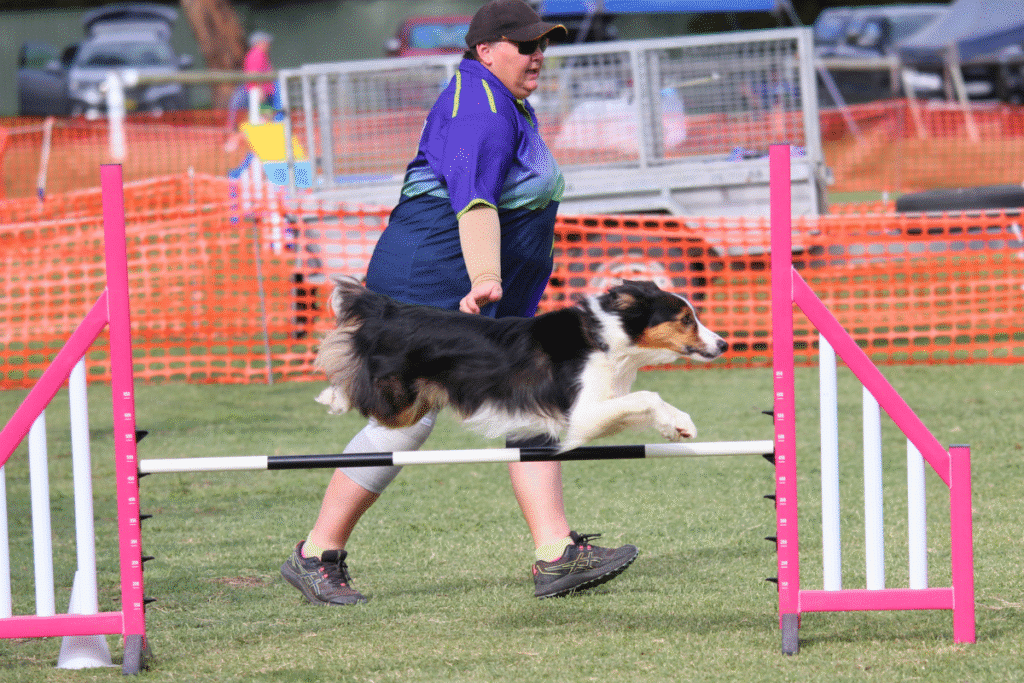
Dogs naturally move on parallel lines with their handler, whether you are close or handling at a distance . This means your movement, even small changes, influences your dog’s path.
If your dog is drifting off a line or taking the wrong obstacle, it’s often because your line told them to, not because they made a mistake.
Leading legs
Dogs can only naturally turn in the direction of their leading leg, the front leg that is extended forward while running .
That means:
- Timing your cues earlier helps your dog change their lead leg efficiently
- Late cues make turning physically harder for the dog
- Good handling supports the lines and makes things easy for your dog
Once you start noticing leading legs, you’ll see why some turns feel easy and others feel impossible.
Critical points: planning instead of reacting
Another key takeaway is the idea of critical points. Critical points are the places on a course where you need to be, at a specific time, to help your dog successfully navigate the next sequence .
Most handling problems don’t happen randomly.
They happen because:
- You were late to a critical point
- Your dog didn’t have enough information early enough
- The plan didn’t match your team’s strengths
When you start identifying critical points during your course walk, everything becomes more intentional. Instead of reacting in the moment, you’re already in the right place, at the right time, giving the right cue, and that removes the need to rush.
What this means for your training
The biggest shift from this webinar is how you think about agility.
Instead of asking:
How can I keep up with my dog?
You start asking:
How can I make this clearer for my dog?
That change in perspective leads to better decisions in training:
- You focus on foundations instead of shortcuts
- You reward in ways that build independence
- You plan your handling instead of chasing your dog
- You trust your dog more
And over time, things start to feel easier. Not because your dog slowed down, but because you’re both working together more efficiently.
Final thoughts
Agility really is for everyone. Whether you can sprint full speed or prefer to handle at a distance, the goal is the same: clear communication and teamwork.
As the webinar puts it, if running faster isn’t an option, the answer is to build more skills with your dog and focus on the foundations that make agility easier. Because when your dog understands you, and you understand your dog, running becomes optional.
And that’s where the real progress starts.
👉 Watch the full free webinar here:
https://www.oneminddogs.com/free-webinar-dog-agility-running-faster-not-option/
Try one small thing from it in your next session, something simple, something clear, and see what your dog shows you.