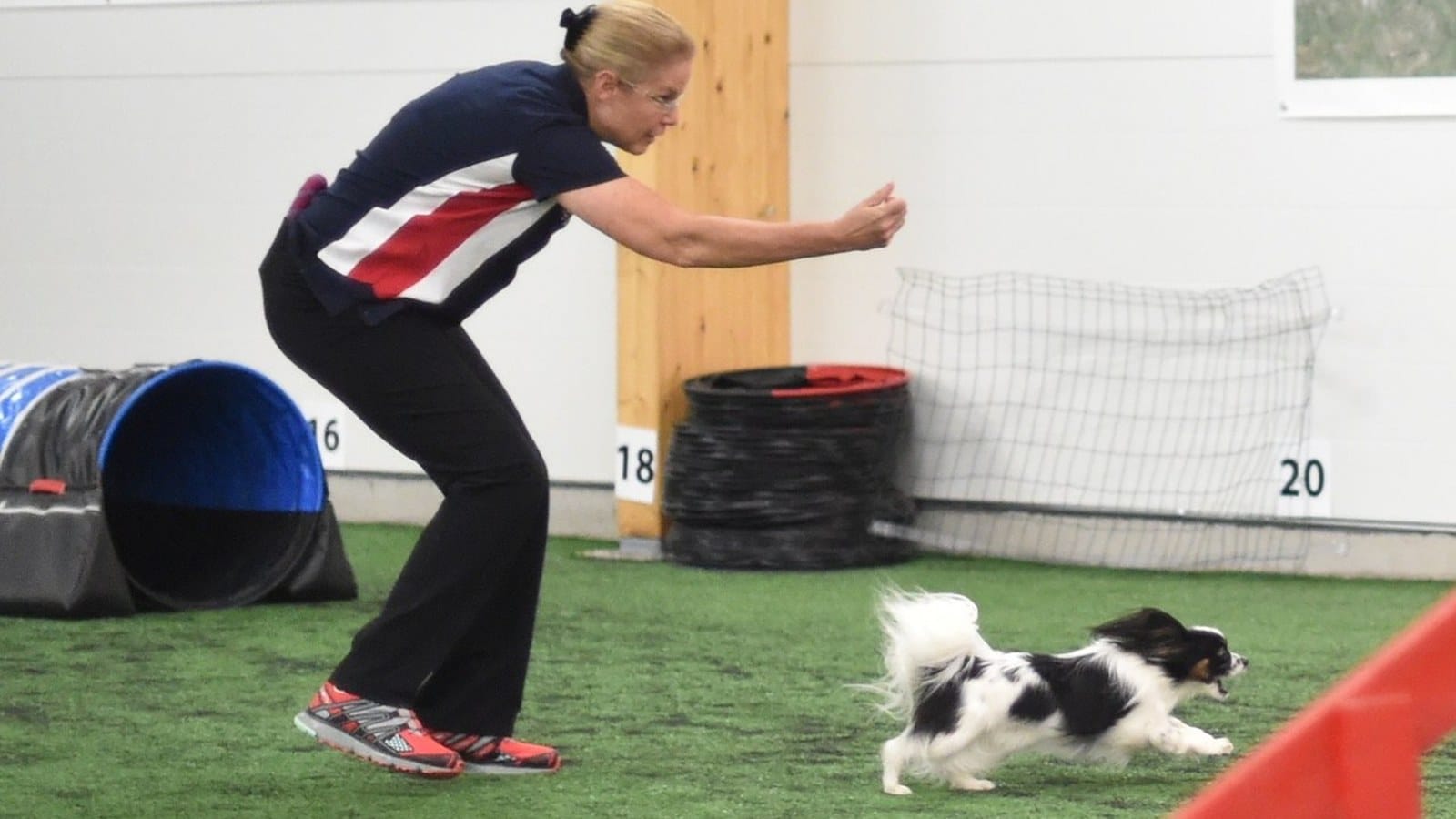
Walk around any agility trial and you’ll spot plenty of border collies. Stay a little longer and you’ll also see shelties zipping through the weaves, spaniels bouncing between obstacles with their tails going, a terrier who clearly thinks the whole course was built just for them, and lots of mixed breeds having the time of their lives.
So what are the best dog breeds for agility? A handful of breeds show up again and again at the top of competition results, and we’ll go through them below. But here’s the more useful answer: the best agility dog is one who is fit and healthy, enjoys doing things with you, and has a handler who’s keen to learn alongside them. That describes a lot more dogs than you might think.
Which breeds are most popular in agility competitions?
At competitions, especially at the higher levels, certain breeds dominate the results. They tend to share a few traits. Most were bred to work closely with people, they love to move, and they’re quick to pick up new information.
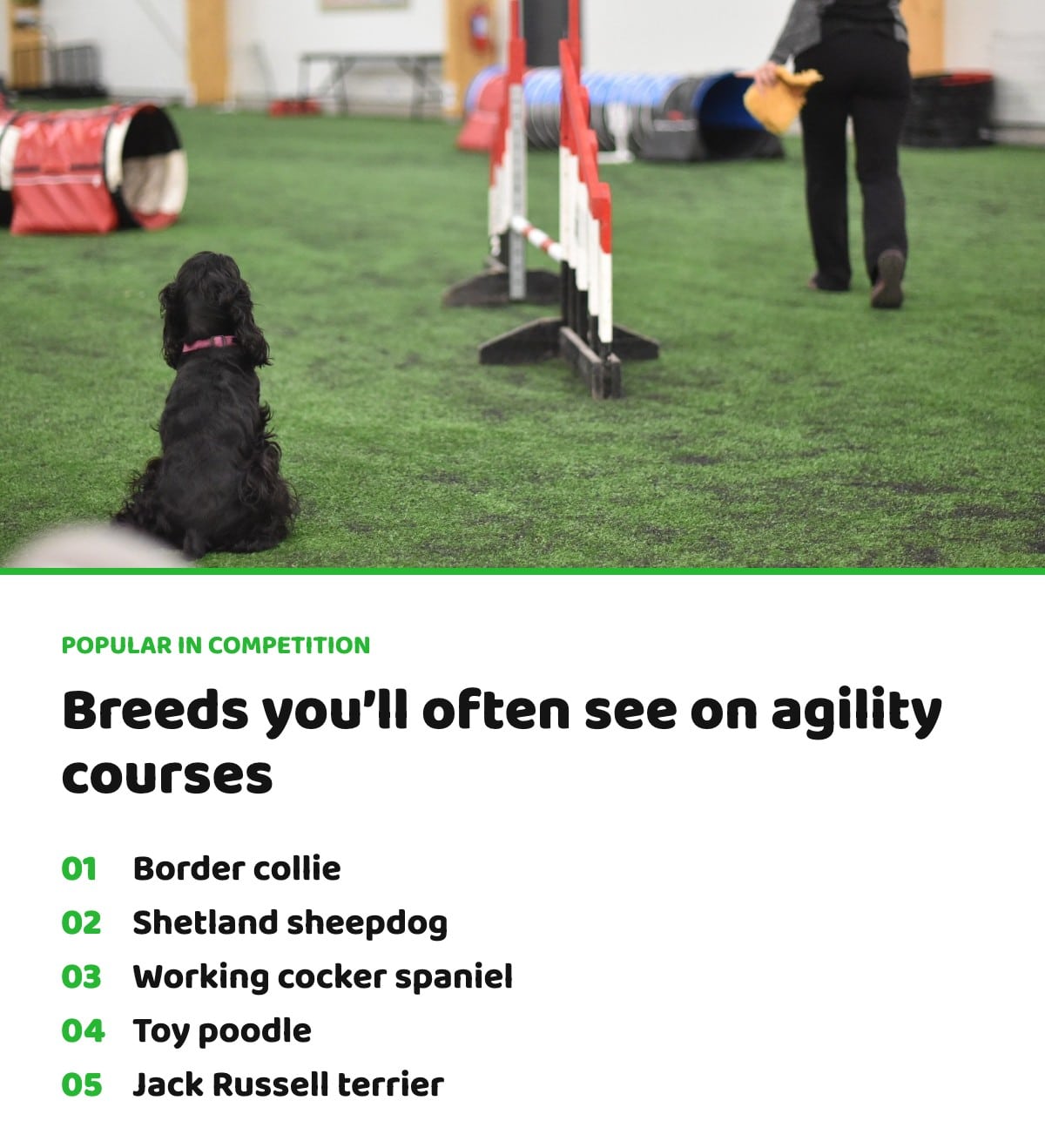
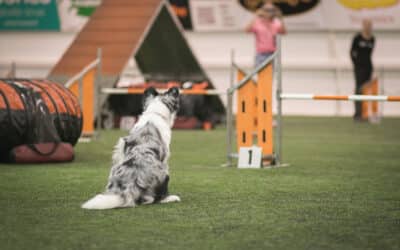
Border collie. Bred to work livestock in close partnership with a handler, border collies are by far the most common breed you’ll see in the larger height classes. They’re fast, responsive, and they love having a job.
Shetland sheepdog. Shelties are another herding breed that thrives in agility. They’re a regular sight on the podium in the smaller height classes, known for quick footwork and tight turns.
Working cocker spaniel. Working cockers have become an increasingly familiar sight on agility courses. Bred to hunt close to their handler, they bring huge enthusiasm and a compact, nimble body that can turn on the spot. They’re a great reminder that agility success isn’t limited to herding breeds.
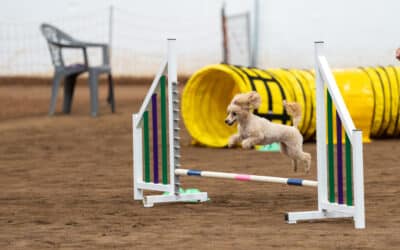
Toy poodle. Poodles are clever, athletic, and quick to learn, and toy poodles pack all of that into a tiny, nimble frame. They’re a popular choice in the smallest height classes and a great example of how much a small dog can bring to the sport.
Jack Russell terrier. Small, tough, and full of drive, terriers often surprise people on course. What they lack in size they make up for in commitment.
You’ll also see plenty of Australian shepherds, kelpies, Pyrenean shepherds, papillons, and mixed breeds doing brilliantly, both in competition and at local clubs.
Do you need one of these breeds to do agility?
No. These breeds appear at the top of results because many of them were bred for jobs that need speed, agility, and close teamwork with a person, and because people with podium ambitions often choose them for that reason. That tells you who tends to win at the highest level. It doesn’t tell you who can enjoy agility.
Any dog can do agility as long as they’re physically fit and healthy enough for it. Body shape affects how you train, not whether you can. A larger or heavier dog might work at a lower jump height and need more focus on conditioning. A long-backed or short-legged dog might do more ground work and less jumping. A young puppy can start learning foundation skills early, while full jump heights and repetitive impact are best saved for when their body has finished growing. If you’re unsure, have a chat with your vet before you start.
Agility is for everyone, and that includes the dog who’s sitting next to you right now. And if you’re wondering whether your dog needs to be quick, we’ve covered that too in is my dog fast enough for agility?
What agility gives your dog (and you)
Whatever your dog’s breed, agility offers a lot more than ribbons. A dog’s brain needs a job, and agility is a great one. Here’s what you both get out of it:
- Physical exercise matched to your dog’s body and fitness
- Mental stimulation from solving new challenges and sequences
- Confidence built by learning and mastering new skills
- Clearer communication, as you learn to see the course from your dog’s perspective
- A stronger connection from working as a real team
- Fun, fitness, and a welcoming community for you as the handler
Many handlers say the biggest change isn’t on the agility course at all. It’s in how well they understand their dog in everyday life.
You don’t have to compete to do agility
Plenty of people train agility without ever setting foot in a competition ring. Some train in the backyard, some at a local club, and some online at home with a few pieces of equipment. All of that is agility.
If competing becomes a goal later, great. If it never does, that’s just as valid. The point is to have fun with your dog, give them a job they love, and build a partnership you’re both proud of.
Where to start, whatever your dog’s breed
Every great agility team starts with the same building blocks: a dog who understands what your body is telling them, a handler who knows how to give clear information at the right time, and lots of positive experiences along the way. None of that depends on breed.
Our Foundation for Agility program is built for exactly this stage. You’ll learn to understand agility from your dog’s perspective and build the skills that make every future course easier, at home and at your own pace, with whatever dog you have by your side.