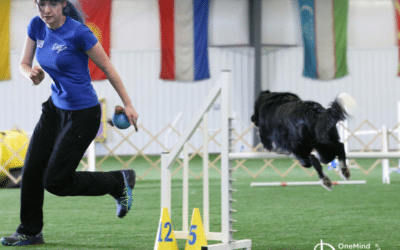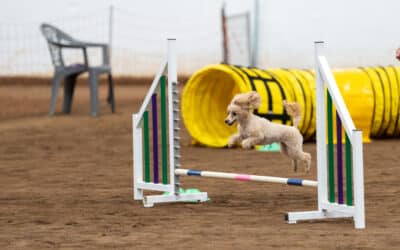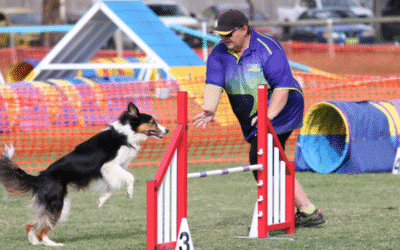
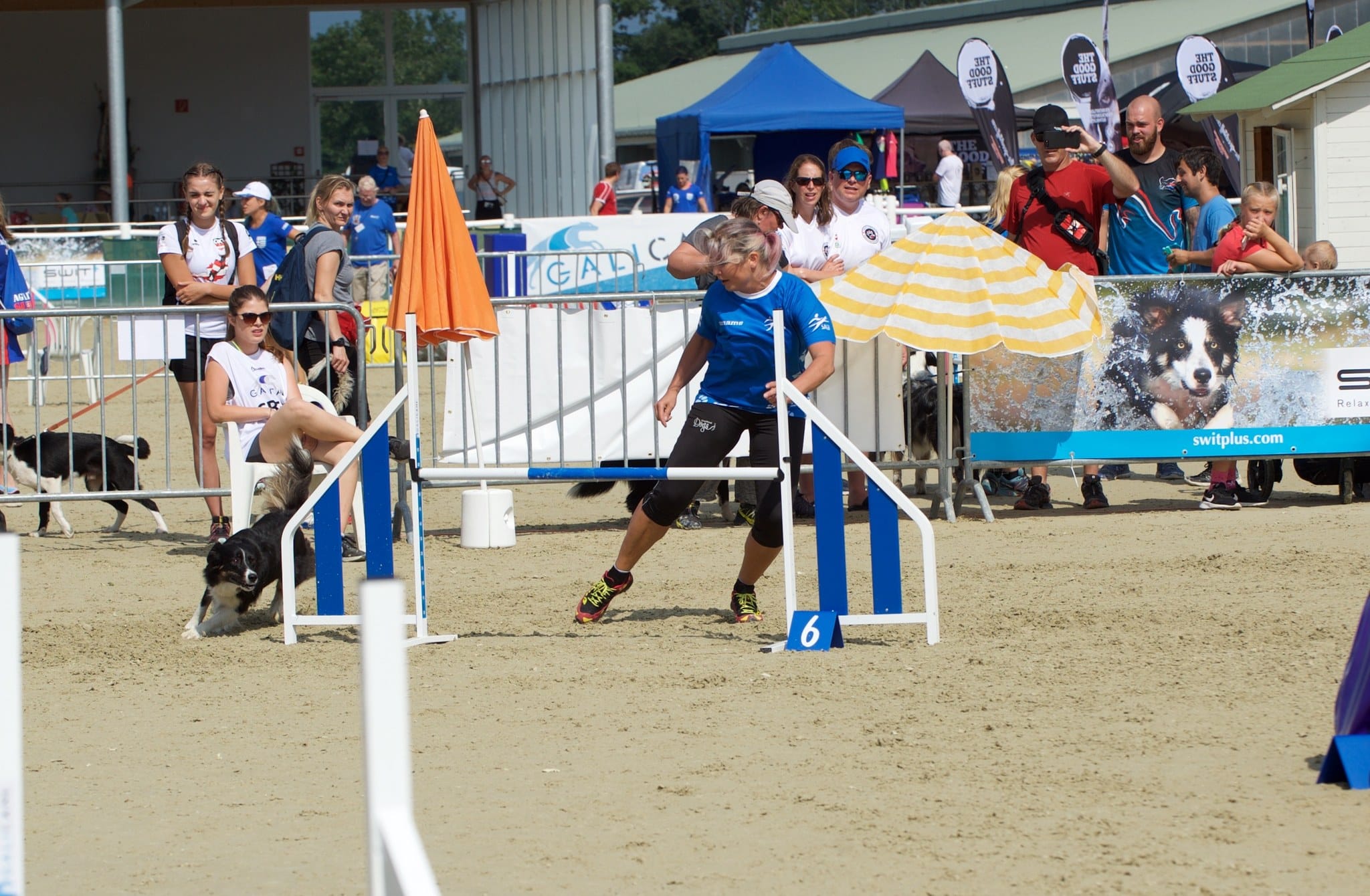
A Backside Send is a handling technique where you send your dog around the back of a jump, so they take it from the far side. With a well-trained Backside Send, you can send your dog behind the jump from a couple of metres away, or even further, while you get on with the next part of the course.
Why would you use a Backside Send?
Courses are full of backside approaches, and you can’t always be standing right next to the wing when your dog needs to find one. A Backside Send lets your dog take that line on their own, which frees you up to move to where you need to be next.
The Backside Send is also an important building block for other techniques. The German Turn and Running on the Dog’s Line both rely on your dog being able to find and finish the backside without you. The more independent your Backside Send is, the easier those techniques become.
How we teach the Backside Send from the dog’s perspective
Start with your dog’s working line
Every dog has a natural working distance from their handler. For most dogs it’s around one metre, but every dog is different. Once you know your dog’s working line, you can use it to set their lines on course. When you run a parallel line to the line you want your dog to take, your dog follows that line naturally.
Set the line from the previous obstacle
One of the crucial parts of how we teach the Backside Send is setting the line to the backside from the previous obstacle. At first, we get you to use your body language to make the backside a natural decision for your dog. To do this, you run a parallel line to the backside of the next jump, which can mean running a bit more in front of the bar. As you progress and proof the skill, moving towards your dog’s line adds the pressure they need to head to the backside, even when you’re a few metres away.
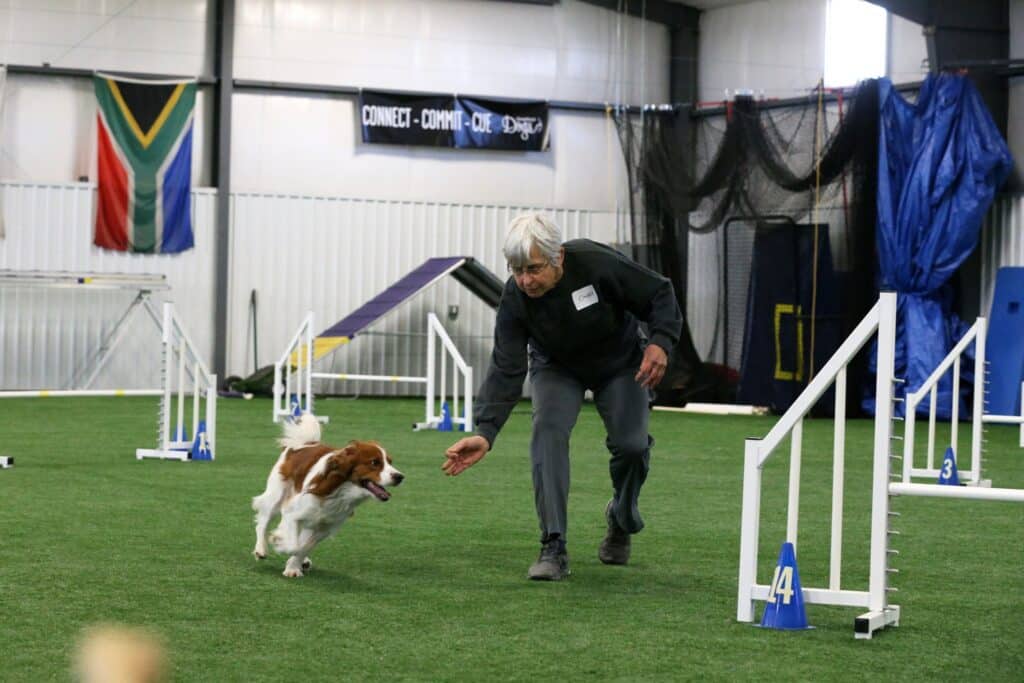
From your dog’s point of view, this makes it really obvious that you don’t want the front of the jump. They don’t see an inviting bar in front of them. They see the wings, and the line to the backside becomes the natural choice. We use our position and the direction of our body language wherever we can to make each technique clear for the dog, then add distance and independence once they’ve got it.
Pair it with a verbal cue
While teaching the Backside Send, we pair your body language with a verbal cue. Over time your dog connects the two. Then, on the occasions you can’t get into position, the verbal adds an extra layer of understanding.
Add distance and independence early
Once your dog understands the basics, start adding distance and independence as soon as possible. Many handlers wait too long here, and it holds them back later when they want to use techniques that depend on the Backside Send.
Your body language still matters at a distance
A lot of people think that once you add distance, the only way to get a backside is a really strong verbal cue. Realistically, that isn’t the case. The direction you move in still pushes your dog’s line, even from far away.
Even if you can’t be near the jump, you can move into your dog’s line to add pressure, or pull away from it to draw them towards you. This gives you control at a distance and still lets you set the line to the backside from the previous obstacle. It’s one of the things people most often forget.
Commitment is the key
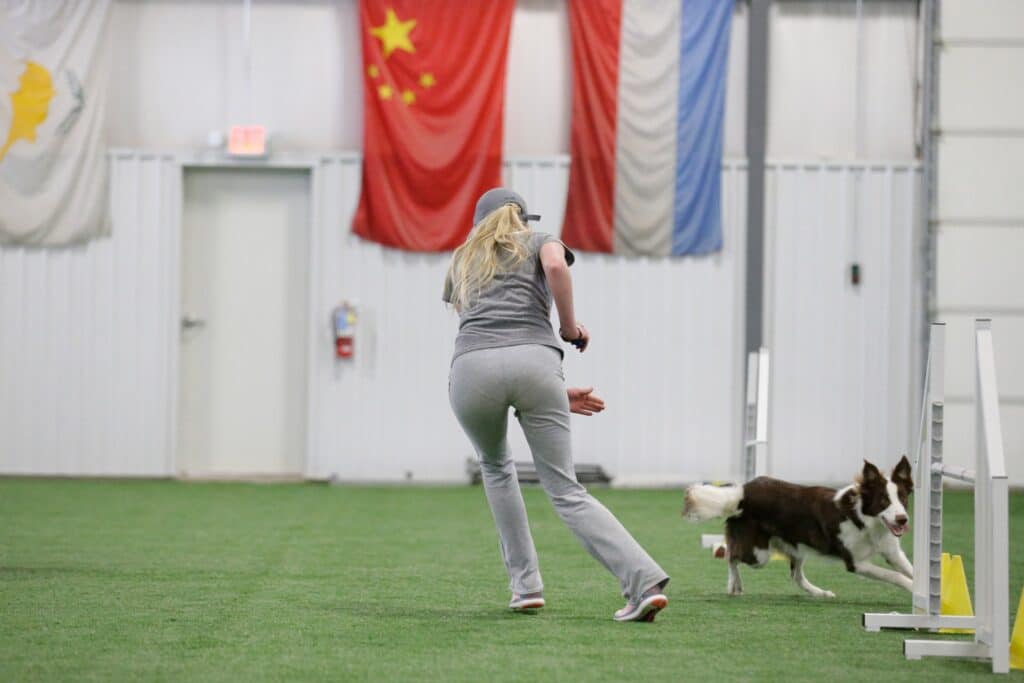
The other essential part of teaching the Backside Send is commitment. Once your dog commits to the line to the backside, they need to stay committed regardless of what you do next.
This builds trust. When you know your dog will finish the backside on their own, you can leave early and get to where you need to be. No more pulling off the jump as soon as you move away. That’s what makes techniques like the German Turn and Running on the Dog’s Line so much easier to handle.
Learn the Backside Send step by step
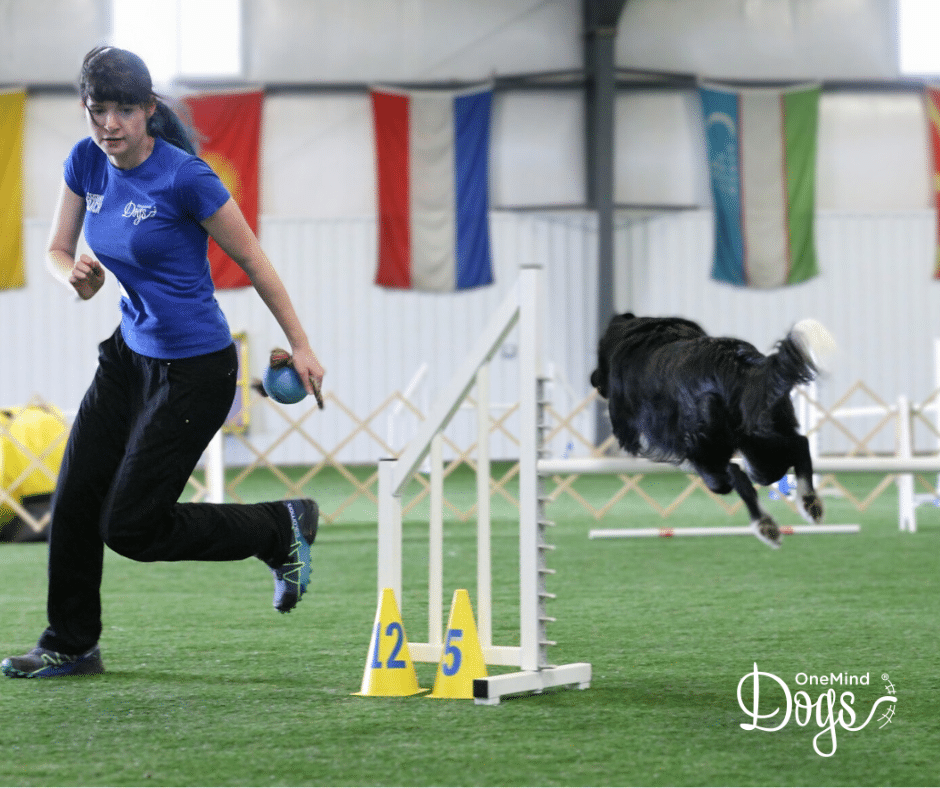
If you’d like to see how the Backside Send looks in action, watch our Backside Send lesson video. Members can go straight into the full lesson series. If you’re not a member yet, you’ll see a free preview of the technique, and you can start a free trial to learn it from the very first step right through to sequencing.