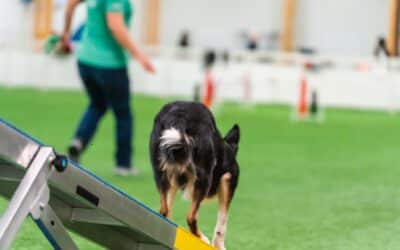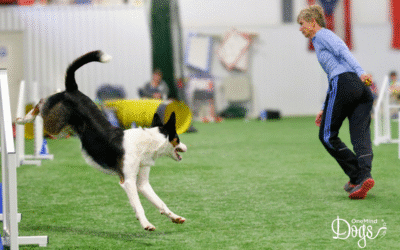
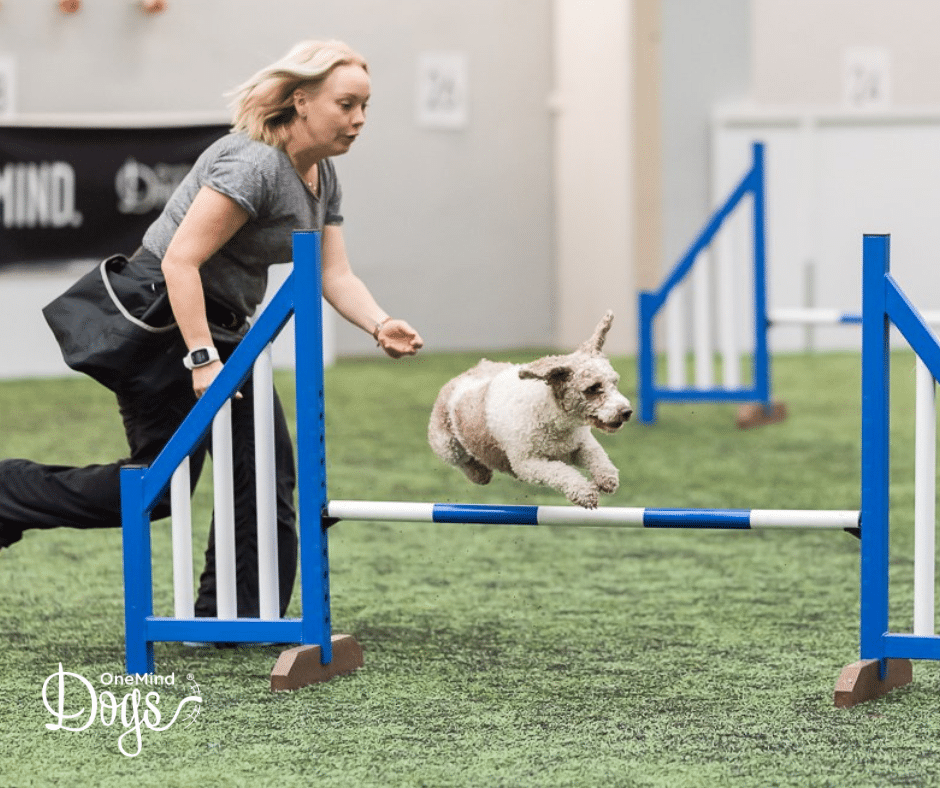
In agility, there are times when your dog’s speed simply outpaces yours. You find yourself a few steps behind, watching them power through the course while you try to keep up. That’s exactly when the Whisky Cross agility handling technique becomes a game-changer.
The Whisky Cross is a type of Rear Cross, executed at a tight angle, often from the side or even the backside of a jump. It’s designed to help your dog stay confident and connected when you’re behind them, giving them the freedom to drive ahead at full speed while still reading your cues clearly.
This handling technique is one of the few in the OneMind Dogs method that requires some teaching steps for the dog, especially if your dog is not forward focused, but the reward is worth it. When trained correctly, the Whisky Cross builds obstacle focus, trust, and independence, allowing your dog to run their natural speed without constantly checking back for you.
What makes the Whisky Cross unique
Unlike a standard Rear Cross, where your dog approaches the obstacle head-on, the Whisky Cross involves a tight angle of approach. Your dog can’t see the jump bar immediately, so they rely on your body cues to understand where to go.
This makes the Whisky Cross a little more advanced, but also incredibly rewarding to master. It’s an excellent choice for:
- Handlers who are often behind their dogs on course
- Dogs that are too handler-focused and hesitate to move forward
- Teams looking to improve obstacle commitment and flow
By teaching your dog to take the Whisky Cross confidently, you’ll help them trust the obstacle, focus forward, and maintain rhythm even when you’re a few steps behind.
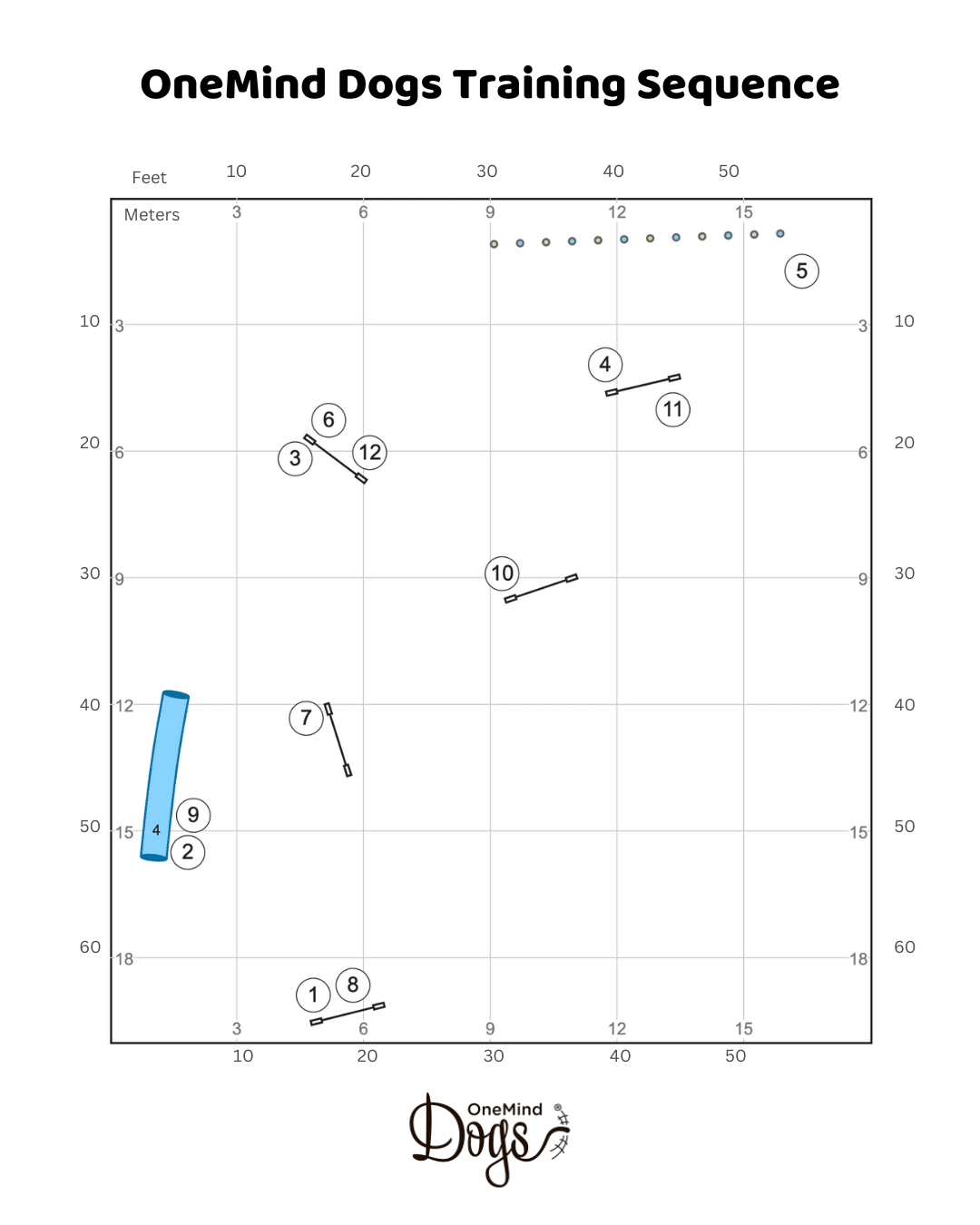
One example where Whisky Cross could be used would be in the map below, if you start with your dog on jump 1 and allow them to pass you on the way to jump #4 where you would do a Whisky Cross. You could then also use Whisky Cross on #7 and #10 if your dog is ahead of you. Download a larger map and watch a video of this sequence here >.
Why the Whisky Cross agility technique helps both dog and handler
At its core, the Whisky Cross teaches your dog to work independently. The more confident they become in taking obstacles without relying on your position, the smoother and faster your runs will be.
Here’s what makes this technique especially valuable:
- It gives your dog freedom. They learn thatt they can continue forwards on the course, even when you’re not right beside them.
- It increases obstacle focus. Dogs that tend to watch their handler’s every move will learn to look for their next obstacle instead.
- It supports less mobile handlers. You can guide your dog from behind without losing clarity.
- It improves teamwork. The Whisky Cross is all about communication, timing, and trust, the foundation of great agility.
For many handlers, learning this technique feels like a breakthrough moment: it proves that agility isn’t about running faster, it’s about understanding each other better.
The seven elements of the Whisky Cross
Every OneMind Dogs handling technique is built around seven key elements: movement, position, eyes, chest, legs, arms, voice. Together, they create clear, consistent communication that dogs instantly understand.
Using your 7 elements consistently every time you handle the Whisky Cross allows your dog to predict what’s coming next. Dogs LOVE predictability and consistency, it increases their confidence and trust in their handler and themselves. This is they key reason that OneMind Dogs Coaches will always encourage you to adjust your handling elements until all 7 support the same thing.
OneMind Dogs Agility Premium members can submit unlimited videos of their training and competition runs, allowing our coaches to give detailed, specific feedback about the handling elements and how they are affecting the dog.
The handlers movement, position, eyes and chest laser are the most important handling elements for a successful Whisky Cross. Premium members can learn more in this detailed video.
Understanding the dog’s line
From the dog’s perspective, the Whisky Cross can feel tricky at first. Because they can’t see the bar on approach, they must rely on your motion and chest rotation to understand that the obstacle is ahead.
The handler’s job is to keep moving forward, maintain pressure on the dog’s line, and make sure the dog can see the obstacle as they commit. The moment your dog commits, you can already prepare for what comes next.
When taught with patience and clarity, the dog begins to anticipate the cue sequence instinctively. Over time, the Whisky Cross becomes a seamless part of your handling toolkit.
Teaching the Whisky Cross
The Whisky Cross agility technique isn’t something all dogs “pick up” naturally, sometimes it requires gradual teaching and clear communication.
Start with simple setups and build obstacle focus before adding tight approaches. The more comfortable your dog is driving forward independently, the faster they’ll learn. Place a reward on the dog’s landing to help them with forward focus at first.
If your dog is still developing confidence with Rear Crosses, it’s best to master those first. The Whisky Cross builds on the same core skills but asks for more trust and commitment from both of you.
Once your dog understands the concept, you’ll notice real changes on course:
- They’ll take jumps without hesitation.
- They’ll stay focused forward even when you’re behind.
- They’ll run their true speed rather than waiting for you.
Common challenges and how to handle them
1. The dog won’t commit to the jump.
This is common early on because the dog can’t see the bar clearly. Move closer to the wing, show the line, and keep gentle motion pressure until they gain confidence. Drop a reward on their line after landing to help.
2. The handler stops moving too soon.
If you slow down or hesitate, your dog may lose commitment or wrap back towards you instead of slicing the jump. Keep steady forward motion to guide their path.
3. The dog cuts in front or runs past the jump.
This often happens when the handler’s chest or eyes stay facing the dog too long. Rotate your body toward the landing side early enough to show direction.
Remember, agility isn’t about controlling your dog; it’s about showing them the path clearly so they can make fast, confident choices.
Tip from the pros
When practising the Whisky Cross, always remember three key points:
- Keep moving forward to maintain pressure on the dog’s line.
- Turn your chest toward the dog’s landing line to hep them commit.
- Make sure your dog can see the obstacle on approach.
And don’t worry if it doesn’t click right away. Every dog learns differently, and confidence grows with repetition and trust.
Why this technique is worth it
The Whisky Cross agility technique may take time to teach, but the payoff is huge. Once your dog understands it, you’ll unlock smoother handling, faster runs, and a stronger sense of teamwork.
It’s especially empowering for handlers who can’t or don’t want to sprint around the course. The Whisky Cross lets you handle efficiently from behind, keeping both you and your dog relaxed and confident.
Dogs that once hesitated or looked back for guidance start driving forward with enthusiasm. Handlers who used to worry about “keeping up” can finally enjoy the flow of the run.
Learn the Whisky Cross the right way
If you’re ready to put the Whisky Cross into action, our Mini-Course: Whisky Cross walks you through every stage, from foundation skills and footwork to applying it in a full sequence.
You’ll learn directly from OneMind Dogs coaches who demonstrate the movement, timing, and communication that make this technique so powerful. And you can send in your training videos for detailed feedback – just like working with a live trainer!
The Whisky Cross agility technique might look advanced, but it’s built on simple principles of movement, clarity, and trust. It teaches your dog to run their natural speed, builds obstacle focus, and frees you from the pressure of always being ahead.
With the right teaching steps, patience, and consistent communication, it becomes a smooth, reliable handling option that strengthens your teamwork on every course.
Whether you’re a beginner or an experienced handler looking to refine your skills, the Whisky Cross is a must-have in your toolbox.