If walking an agility course and making a plan for handling your dog leaves you feeling rushed, unsure, or like everyone else sees something you don’t, you’re not alone.
Many handlers start competing with basic training behind them, only to discover that course analysis feels like a completely different skill. Suddenly there are multiple options, opinions from other handlers, and very little time to decide what to do. It’s easy to walk away thinking you just need to be faster, smarter, or more experienced.
But the problem usually isn’t just your experience level.
It’s that most people are taught to analyse courses from a human perspective, not from the dog’s.
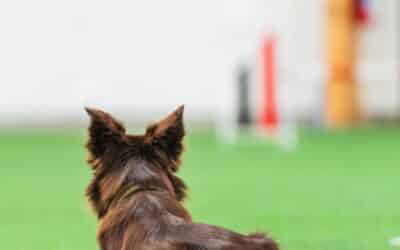
Dogs don’t see obstacles, they see lines
One of the biggest shifts you can make in course analysis is understanding this simple idea:
Dogs see the course as lines.
The obstacles just happen to sit on those lines.
Every obstacle creates an exit line, and that line naturally flows toward the next obstacle. Your job as the handler isn’t to micromanage every step. It’s to clearly tell your dog which line to take.
When course walks feel overwhelming, it’s often because you’re trying to remember numbers, instead of first understanding the lines your dog is likely to see. When you focus on remembering lines, the flow of the course and your handling choices, courses start to feel a lot easier.
Why course analysis feels difficult
At training, things usually feel clearer. You know the exercise, the setup is familiar, and there’s time to repeat and adjust.
At a competition, everything changes:
- limited course walk time
- unfamiliar sequences
- pressure to “get it right”
- advice coming from all directions
Without a clear system, your brain jumps straight to questions like:
- should I front cross or blind cross here?
- dog on left or dog on right?
- what if I’m too slow?
That’s when analysis turns into stress instead of clarity.
Start with lines before handling
Before choosing handling options, it helps to slow the process down and ask:
- where does my dog naturally want to go after this obstacle?
- which line is the simplest and clearest for my dog?
- where do I need to be to support that line?
Only after that do handling choices like front crosses, blinds, or rears really make sense.
This is why there’s rarely one “correct” handling solution on a course. Different dogs, different skills, and different handler speeds all change what the best option looks like.
The key factors that actually matter in course analysis
Good course analysis isn’t about memorising numbers or handling moves. It’s about balancing a few important factors:
- Line options: what paths are available to your dog?
- Handling options: how can you support those paths?
- Setting the line: what information does your dog need early?
- Handler speed vs dog speed: what can you realistically support?
- Your dog’s skills: turning ability, independence, commitment
When these factors are clear, decisions become simpler and faster, even under pressure. The best way to learn how to easily and quickly analyse those factors during a course walk, is by getting to know your team and what works best for you. Our dedicated coaching team have developed a Masterclass about lines and handling technique options for exactly this reason!
You can learn more about the masterclass and sign up here >
Confidence comes from understanding, not speed
Many handlers believe that top competitors make decisions faster because they’re quicker or more experienced.
In reality, they’re often calmer because they understand why they’ve chosen a line and how it will affect your dog.
That confidence doesn’t come from running faster. It comes from seeing the course the way your dog does.
See this applied on a real finals course
In our Premium webinar US Open 2025 National Finals Course Analysis, OneMind Dogs Instructor Stephanie Williams walks through the finals course step by step, showing:
- how to identify lines first
- why multiple handling options can all be correct
- how to choose what fits your dog and your team
If you want to see how this thinking works on a real championship-level course, you can watch the full webinar inside OneMind Dogs Agility Premium.