If you’ve ever stood at the start line, watched a fast dog fly past in the run before yours, then looked down at your own dog and wondered if you even belong out here, you’re not alone. It’s one of the most common worries handlers bring to their first agility class, and it raises a real question. Does speed actually matter?
So let’s answer it directly. No, your dog doesn’t need to be fast to do agility. Speed is one variable in the sport, not the entry requirement. Agility is for everyone, and your agility doesn’t need to look like this year’s world champion’s run to count.
Do agility dogs need to be fast?
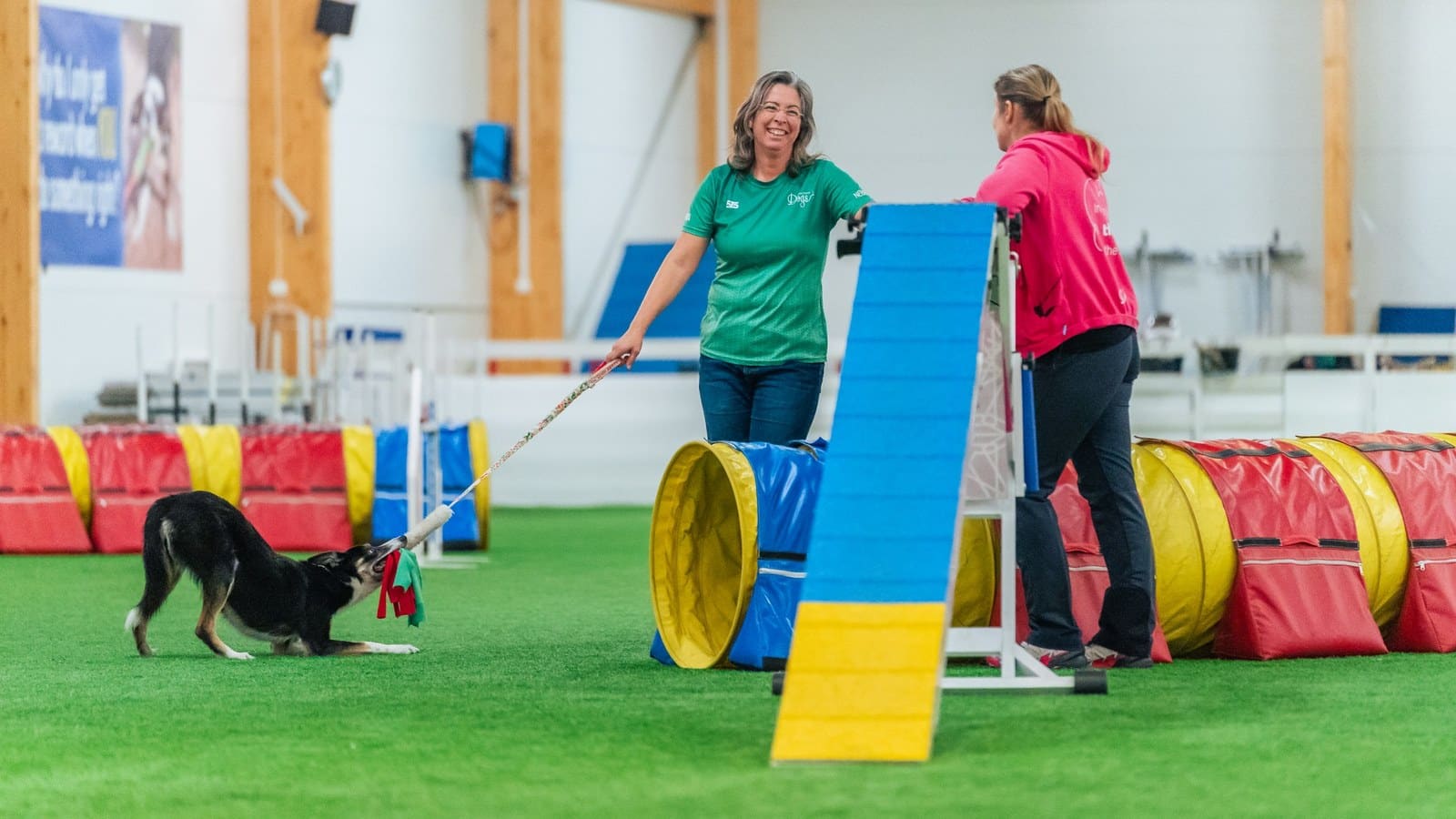
Watch enough agility content online and you’ll start to believe the sport is really just a speed contest with obstacles in the way. Top-level runs are thrilling to watch precisely because they’re fast, so that’s what gets shared, clipped, and put in front of you. What that highlight reel doesn’t show is the huge range of dogs training and competing at every level, at every speed. Slower dogs, older dogs, dogs built more like a couch than a cheetah. Plenty of them are out there having the time of their lives with a teammate who’s just as invested as any handler running a high-level speed demon.
What matters more than speed in agility
If speed isn’t the thing, what is? A few things carry a lot more weight in how enjoyable and successful agility actually feels for both of you.
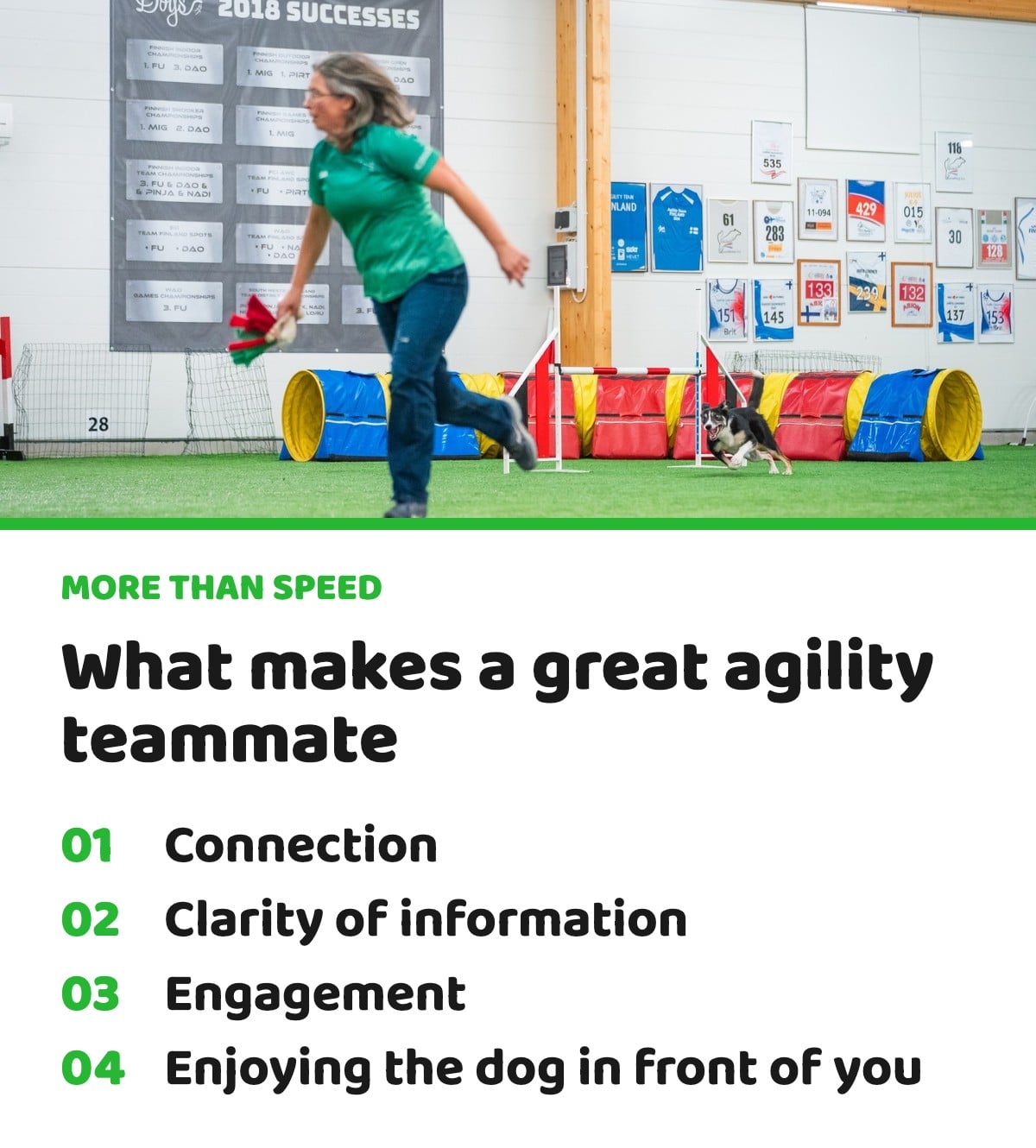
Connection. Agility is built on communication between you and your dog. A dog who reads your body language and trusts your handling will run a smooth course and have a great time doing it, working as a real team with you, regardless of pace. That connection is the actual skill being built in every training session, not raw speed.
Clarity of information. Dogs succeed at agility when they understand what you’re asking. When the information you’re giving comes from body language and cues that are already natural to a dog, the way OneMind Dogs teaches, that clarity builds confidence right from the start instead of confusion and frustration. And confidence changes how a dog runs, whatever their natural pace is.
Engagement. A dog’s brain needs a job, and agility is a fantastic one regardless of how quickly that job gets done. Some dogs are naturally thinkers rather than doers, and their pace on course will reflect that. That’s completely fine. A slower, thoughtful dog who’s fully engaged and enjoying the puzzle is getting just as much out of the sport as a faster dog blazing round a course, because your dog having fun is what the sport is all about.
Enjoying the dog in front of you. Every dog brings a different personality to agility. Some are precise. Some are thoughtful. Some want to squeeze in a zoomie mid-course just because they can. Agility with this dog might not look like the agility you once imagined, and that’s alright. The point was always to enjoy the dog you actually have, not the dog you pictured before you started.
Slower dogs still get real benefits from agility
Speed doesn’t change what agility gives a dog. A slower dog still gets:
- Mental stimulation from working through a sequence
- Physical exercise appropriate to their body
- Time spent working as a real team with their handler
- Confidence built through mastering new skills
- A genuine outlet for a dog’s brain to do a job it enjoys
None of that requires a fast dog. It requires a dog who’s engaged and a handler who’s showing up for training, at whatever pace that training happens. Inside Agility Premium, our coaches help you become the best possible teammate for your dog, whatever your goals are.
If competing is the goal
If your long-term aim is competition, it’s worth knowing that most agility organizations run classes and height divisions that account for differences between dogs, and plenty of clubs and communities exist specifically for handlers running dogs who aren’t naturally quick. Slower dogs compete, qualify, and title all the time. The clock matters far less at most levels than most new handlers assume, and a smooth, connected run where you’re working together as a team will usually get you further than a fast, disconnected one.
If competing isn’t the goal at all, that’s just as valid. Training agility purely for fun, for the relationship, or for a weekly outlet with your dog is a complete and worthwhile way to do the sport. Nobody is required to trial to count as doing agility properly.
The real question to ask instead
Instead of “is my dog fast enough,” a more useful question is: is my dog enjoying this? Are we communicating well? Is training giving my dog a job their brain actually wants?
If the answer is yes, you’re already doing agility right, whatever the clock says.
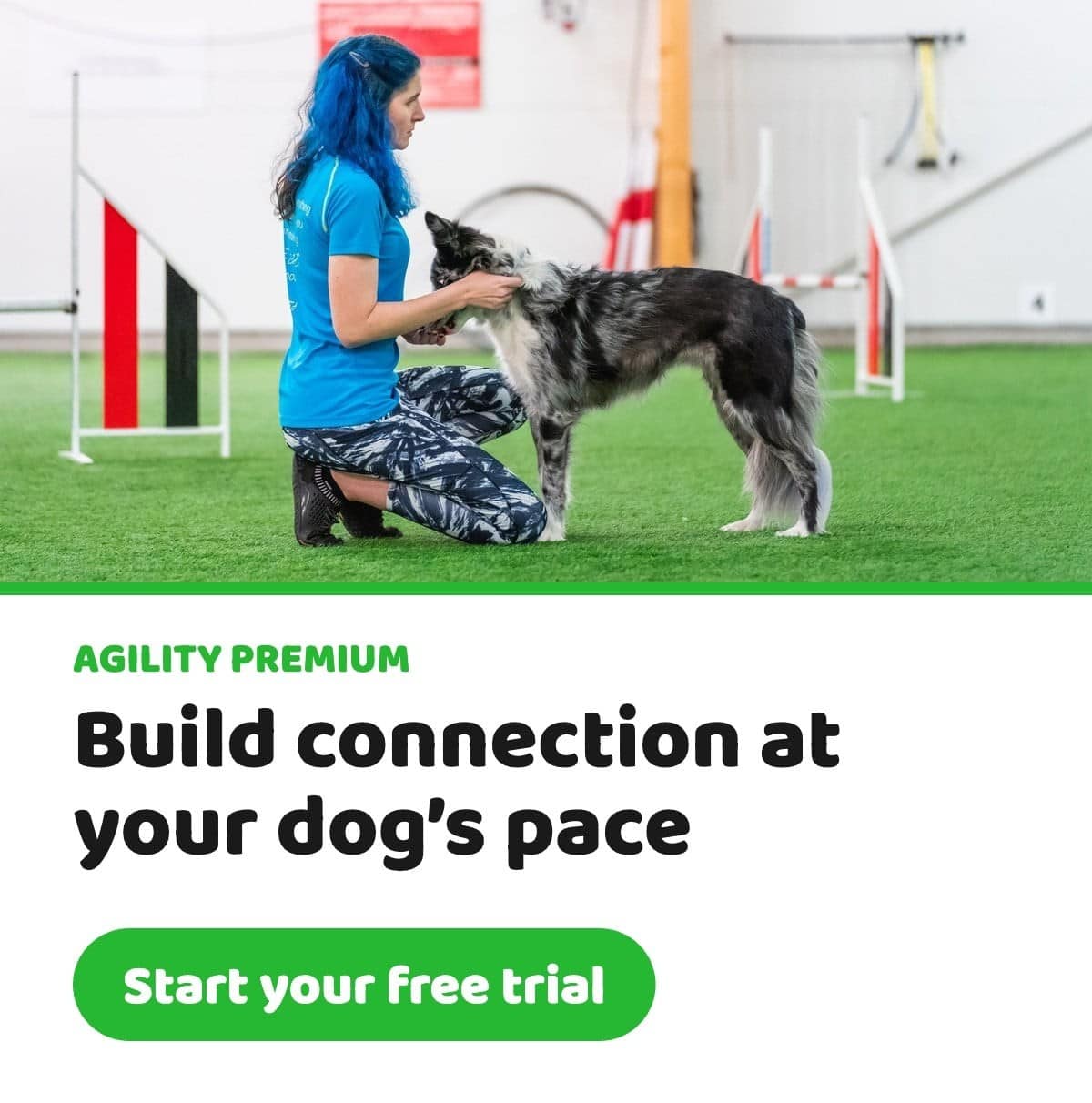
Ready to build that connection, at your dog’s own pace?
At OneMind Dogs, our method is built around understanding agility from your dog’s perspective, not chasing someone else’s idea of what a “real” agility dog looks like. Whatever pace your teammate runs at, we’ll help you build the communication and confidence that makes agility work for both of you. Try Agility Premium free and see how far that connection can take you.