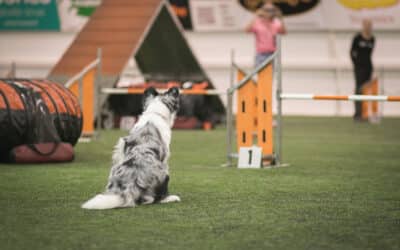
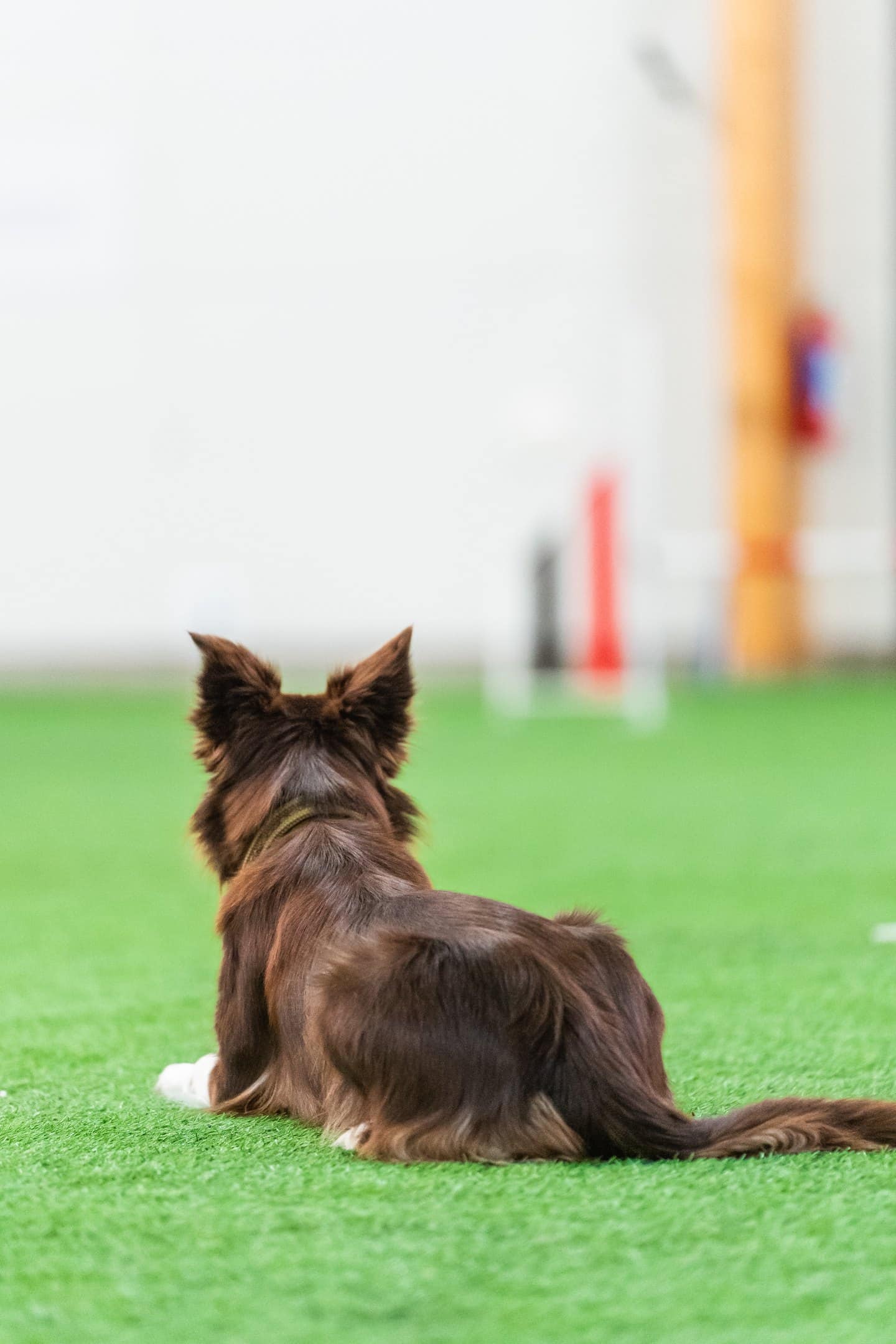
If you compete in agility, you already know how much a start line stay matters.
Modern courses are bigger. Lines are longer. Dogs are faster. And being able to lead out with confidence changes how you handle the entire course. When your dog can hold position calmly while you move to the critical point, everything feels more organised.
When they can’t, the whole run can feel rushed before it even begins.
If your start line has been inconsistent lately, you’re not alone. Most agility handlers go through phases where their start line feels unreliable. The good news is that a solid start line is very trainable.
Let’s walk through how to build one properly, and how to rebuild it if needed.
Step 1: Decide your criteria
Before you train anything, be very clear about what you actually want.
- Is it a sit or a down?
- Does the dog need to remain completely still?
- What exactly releases them? A word like “okay”? The name of the first obstacle?
This might sound obvious, but a lot of start lines fall apart because the criteria slips over time. One week you insist on a straight sit. The next week you allow a small creep because you’re in a rush. Then at a trial, you just take a few steps and start running in a panic!
Dogs do much better when the picture is consistent.
A simple example of clear criteria might be:
The dog remains in position, on that spot, until the handler gives the release word. Movement, noise, other dogs, or handler motion do not release the stay.
Once you’ve decided, protect those criteria. If your start line is a sit, it’s always a sit. If the dog stands up or scoots forward, calmly reset them. Not as punishment. Just information.
One small but important tip: make sure your dog is releasing on the verbal release cue, not your body movement. Many handlers say the release word while stepping forward, and the dog learns to release on motion instead. Lead out. Be still. Say the release word. Then move.
That clarity alone fixes a surprising number of start line issues.
If you’d like a deeper walkthrough of this process, including examples and troubleshooting, we cover it in detail here:
👉 https://www.oneminddogs.com/dog-agility-skills-5-steps-to-a-solid-startline-stay/
Step 2: Train the basic stay properly
Before we talk about distraction and distance, the basic stay needs to make sense to the dog.
Start by teaching the position itself. For many dogs, a sit-stay is easier in the beginning, but a down-stay is absolutely possible if that’s your preference.
Reward the dog in position. That part matters.
Dogs understand “you are right.” They don’t understand “you were right.” If you reward after they’ve already stood up, you’re muddying the picture. Reward while they are still sitting or lying down.
Build duration gradually. A few seconds at first. Then a little longer. Do not jump from three seconds to thirty seconds in one session.
And always use your release word before the dog gets up. That’s how they learn that staying is the job until they hear that cue.
This stage is not glamorous. It is quiet, repetitive work. But it creates the base that everything else rests on.
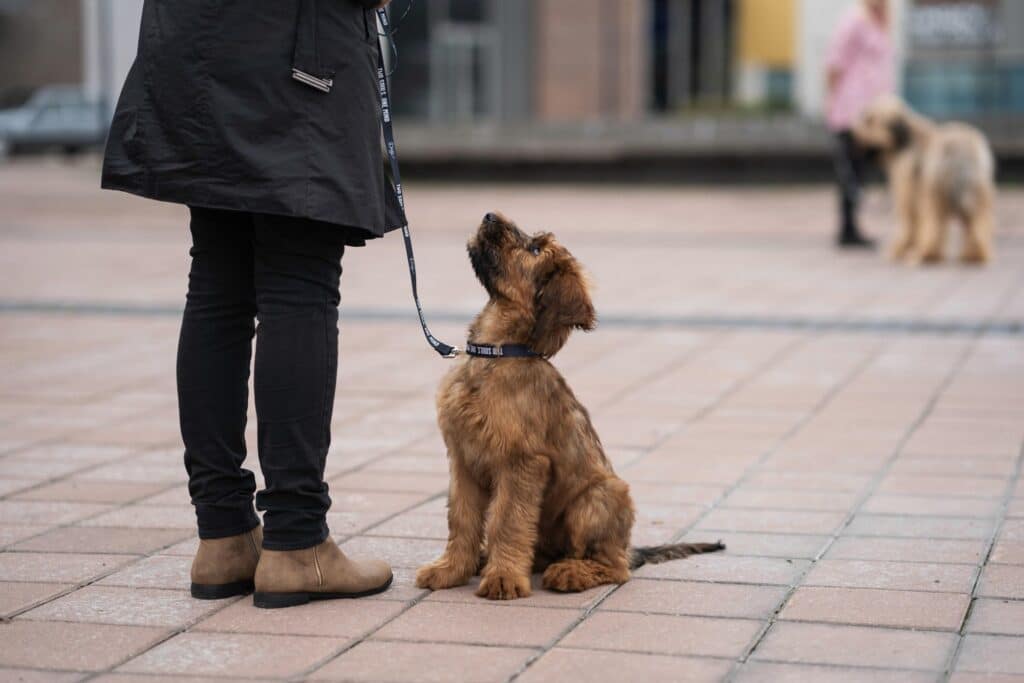
Step 3: Introduce distraction and distance
Once your dog understands the basic stay, the next step is teaching them that it still applies when life happens.
Start small. Your own movement is the first distraction. Take one step away. Come back and reward in position. Move to the side. Come back and reward. Gradually increase the distance.
Always return to your dog and reinforce the position before releasing. This tells them that holding position is what earns reinforcement.
Then begin layering in environmental distractions. Sounds. Movement. Another dog nearby. A leash runner passing behind them.
The key is to raise difficulty in small steps. Going from your backyard to a busy trial site is usually too big a jump. A quiet park is a more realistic next step.
Proof your movement carefully. Your dog should not release because you turn your shoulders or take a step. Only the release word ends the stay.
You can also practice in everyday life. Waiting at doors. Waiting for dinner. Waiting before chasing a toy. A start line stay is really a patience skill.
Step 4: More proofing and trial preparation
Competition environments are noisy and stimulating. You can prepare for that.
Train in different places. Add mild chaos gradually. Practice leash on and leash off. Toss a toy. Have a friend move around behind the dog.
If you have a dog that stresses high, they may creep forward. If you have a dog that stresses low, they may look disconnected or slow to respond. Both can affect the start line, and both require clarity rather than correction.
Some handlers find it helpful to shorten sequences temporarily so the dog reaches reinforcement faster. Others use NFC runs to rebuild confidence in the ring without the pressure of a score.

Step 5: Maintenance and repairing a drifting start line
Even experienced handlers make mistakes. You get nervous, your dog creeps, you run anyway. It happens.
Over time, those small inconsistencies can blur the criteria.
When a start line starts to unravel, the answer is almost always to go back to foundation. Not to clamp down harder.
Revisit duration. Reward in position again. Re-establish your release cue. Rebuild distraction training in manageable layers.
Often the stay returns more solidly than before because you’re clearer about what you want.
It can also help to look at what the release means to your dog. For many dogs, the release is the gateway to everything exciting. If the reward for staying is unclear or delayed too long, anticipation takes over. Teaching the dog that holding the stay leads to reinforcement, whether that is a toy, food, or the obstacle itself, makes the whole picture more stable.
If your start line feels fragile right now, it doesn’t mean your dog is stubborn. It usually means something in the picture has slipped.
If you’d like to go through this step by step, including examples, common troubleshooting questions, and how to handle competition stress, we cover all of it in our detailed webinar on building and repairing start line stays:
👉 https://www.oneminddogs.com/dog-agility-skills-5-steps-to-a-solid-startline-stay/
Start lines are not about control. They are about clarity, patience, and consistency. When those pieces are in place, leading out stops feeling like a gamble and starts feeling like a plan, and that changes the whole run.